How to prevent and control white heads and shriveled grains caused by rice neck blast
Rice neck blast is a common, airborne major disease of rice. When rice is about to enter the booting and heading stage, and during the flowering and grain-filling stage, excessive rainfall around heading makes neck blast very likely to occur. After infection, the neck node becomes necrotic, the nutrient transport channel is blocked, and white heads or shriveled grains form. In years when neck blast occurs, yields drop by 10-20%, and in severe fields by more than 30%, or even total crop failure. Once the rice neck is infected with rice blast, the yield and quality of rice are greatly affected.
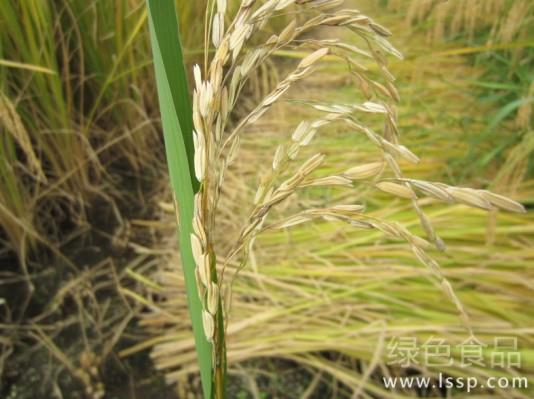
Rice neck blast
I. Damage symptoms:Rice neck blast mainly occurs on the rice neck or rachis. When the neck is affected, the lesion is brown or grayish-black and gradually expands, and can reach 3-4 cm in length. When it occurs early and severely, it causes white heads; when it occurs late and mildly, the 1000-grain weight decreases or grains become blighted. Neck blast often causes the rice panicle stalk to break. The symptoms on the rachis branches, branch stalks and regenerative branch stalks are similar to those on the neck, but at those sites only the spikelets are damaged, and the spikelets are sterile.
II. Occurrence pattern:Rice neck blast spreads via airflow, and the disease spreads quickly. It is related to climate, variety, fertilizer and water management, and physiological variation of the pathogen.
1. Climatic conditions: low temperature, abundant rain, high humidity, little sunshine, alternating sunny and rainy weather, and heavy fog and dew favor the occurrence of neck blast. A daily average temperature of 24-28°C and humidity above 90% make epidemics likely. At the heading stage, if rice encounters continuous low temperature and rain for 3-5 days, neck blast is easily induced.
2. Varietal resistance: the resistance of rice varieties to rice blast is relative, not absolute. The same rice variety has different resistance at different growth stages, and is susceptible at the tillering and heading stages. Continuous large-scale planting of a single rice variety also easily induces rice blast.
3. Cultivation conditions: transplanting too late, high density, insufficient light in the field, poor ventilation, and excessive or late application of nitrogen fertilizer make the field grow excessively, stay green and mature late, increase ineffective tillering, and result in uneven heading, which encourages the development and spread of the disease. Long-term deep-water irrigation or drought.
Rice prevention and control
III. Control methods:According to the occurrence characteristics of rice neck blast, the control method of "prevention first, integrated control" should be adopted.
1. Rationally combine disease-resistant varieties. Two or more varieties should be planted in the same plot, and variety replacement should also be achieved in different years.
2. Reduce the pathogen and implement seed disinfection. Soak seeds with agents such as prochloraz for 2-3 days, stirring once each morning and evening.
3. Properly handle diseased rice straw to minimize the initial infection source.
4. Do a good job in fertilizer and water management, apply more organic fertilizer, and control the amount of nitrogen fertilizer. In our region, common rice varieties generally require 130-150 kg of pure nitrogen, 50 kg of pure phosphorus, 75-100 kg of pure potassium, and 25 kg of zinc fertilizer per hectare. Around July 5, apply 30% pure nitrogen and 40% pure potassium as panicle fertilizer. Around rice heading, when the rice leaves turn yellow, apply 10% pure nitrogen as grain fertilizer. Water use should follow the principle of "shallow at the front, drying in the middle, moist at the back." During the whole growth period, the irrigation depth should be below 3 cm, but in mid-to-late July, if the temperature is below 17°C, deep-water irrigation of more than 20 cm should be used to reduce cold damage.
5. From late July to early August, focus on preventing the occurrence of neck blast. At the initial heading stage, when about 5% of the rice in the field has headed, apply pesticide once for prevention, and apply pesticide once more at the full heading stage.
6. Control agents: 40% Fuji-One, 40% Hinosan, 75% Nativo and other agents.