How to prevent and control peanut southern blight that causes plants to wither and die
Peanut southern blight is one of the major diseases affecting peanut yield. The pathogen mainly overwinters or oversummers in the soil as sclerotia. Infected peanut shells and kernels can also transmit the disease, and the pathogen spreads with running water and rainwater. High temperature and high humidity favor the disease, and fields with long-term continuous cropping, heavy clay soil, low-lying damp terrain, and dense peanut plants suffer more severe outbreaks.
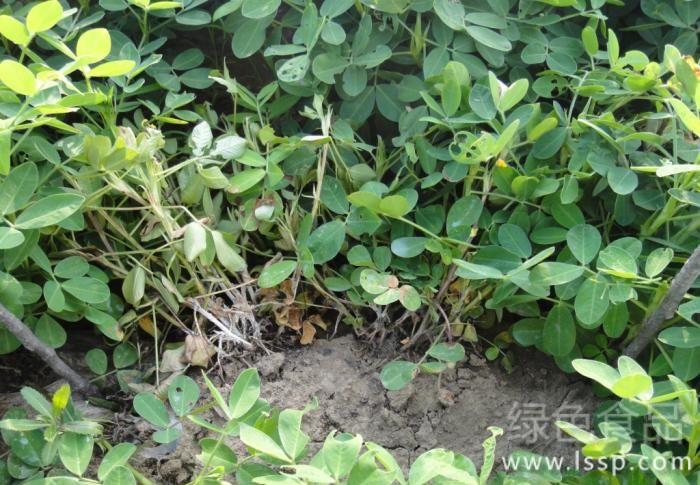
Peanut southern blight
After peanut southern blight occurs, white silky mycelium appears at the root-stem junction of the peanut, the stems and leaves turn yellow and gradually wither and die, affecting yield.
Recently, due to increased rainfall, combined with relatively high temperatures and years of continuous cropping in peanut-producing areas, peanut southern blight has been occurring more severely. Therefore, the prevention and control of peanut southern blight cannot be ignored.
Integrated control
1. Crop rotation. Rotating with crops such as wheat and corn can reduce the damage. Generally, a 2 to 3 year rotation is practiced; for severely affected plots, rotate for more than 3 years.
2. Seed treatment. Peanut seeds should be thoroughly sun-dried, and seed dressing with fungicides should be done before sowing. You can use 50% carbendazim wettable powder or 2.5% fludioxonil (Celest) suspension seed coating agent, dressing at 0.2% of the seed weight.
3. Strengthen cultivation management and promptly remove sources of inoculum. Reasonably control the planting density of peanuts; drain promptly after rain; once diseased peanut plants are found, pull them out promptly, take them out of the field, and burn them in a centralized manner; after the peanut harvest, promptly remove diseased and residual peanut plant debris from the field, carry out deep plowing and turning to bury the pathogens on the soil surface into the lower layers.
4. Chemical control. In the early stage of the disease, apply a spray drench. The fungicides can be 50% carbendazim wettable powder at 800 times dilution, or 70% thiophanate-methyl wettable powder at 1000 times dilution, spraying 100 to 200 milliliters of solution per peanut plant, once every 7 days, for 2 to 3 consecutive sprays. The above fungicides can be used alternately.