Yam Pest and Disease Control Methods for This Rainy Summer
Yam cultivation is fairly common. In recent years, the price has been above 4 yuan/kg, the returns are good, and the growing area has expanded. Coupled with the heavy rainfall this summer, pests and diseases have been relatively serious. The main pest and disease control methods for yam are introduced as follows:
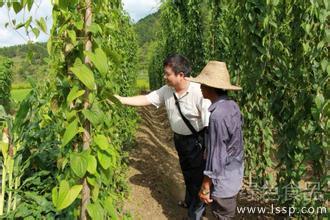
Yam Management
I. Agricultural Control
1. Use disease-resistant varieties: This effectively controls yam pests and diseases. When cultivating, arrange plantings rationally, rotate varieties every 2 to 3 years, and pay attention to the purification and rejuvenation of yam varieties.
2. Practice crop rotation to reduce or avoid damage to yam from stem rot and root-knot nematodes. Rotate at least once every 3 years with crops that are not infected, such as peanut, corn, radish, and watermelon; in old areas where yam is cultivated year after year, rotate at least once a year; in plots with irrigation conditions, it is best to practice paddy-upland rotation.
3. Prepare the soil carefully to directly eliminate pathogens that overwinter in the soil. Choose fertile, loose sandy loam with high, dry terrain and relatively low humidity, and prepare the soil in autumn. You can also plow diseased residues on the surface into the soil to accelerate their decomposition and rotting. After winter freezing and spring sun exposure, some pathogens lose their vitality.
4. Fertilize and irrigate rationally. Yam likes fertilizer. When preparing the soil, apply decomposed organic fertilizer. Generally, increasing the application of phosphorus and potassium fertilizer helps form yam mechanical tissue and enhances disease resistance. Applying too much nitrogen fertilizer can easily cause excessive vegetative growth of yam plants, making stem and leaf tissues tender, and yam is prone to anthracnose. As for watering, do not water unless it is dry. When watering, use a clean water source, and be sure to water thoroughly. There must be no standing water in the field. During the rainy season, drain water in time to avoid root rot in yam.
II. Chemical Control
1. Yam anthracnose, gray leaf spot, brown leaf spot, and others damage stems and leaves, causing stem blight and leaf drop. Control method: soak seed tubers in 1:1:150 Bordeaux mixture for 10 minutes. Spray the first treatment when seedlings emerge uniformly (50% carbendazim 600 times solution), and spray the second treatment 10 days later. When disease occurs in July and August, use 40 to 60 ml of 25% prochloraz emulsifiable concentrate per mu, or 15 g of 75% Nativo per mu, diluted in 20-30 kg of water, and spray 2 to 4 times depending on the severity of the disease, alternating sprays. The interval each time is 8 to 10 days. After rain, the spray solution should be reapplied.
2. Short-bodied nematode disease causes stunting of yam plants, and in severe cases, the whole plant dies; when tubers are damaged, small galls appear, affecting yield and quality. Control method: before sowing, mix chemicals into the soil. Use 5 kg of 5% mecarphon granules per mu mixed with 100 kg of moist fine soil, open furrows, and spread evenly on both sides of the yam seeds, or combine with soil preparation. Spread evenly and work into the soil 25 to 30 cm deep.
3. White grubs bite and feed on tubers. Treat the soil for control. Per mu, use 250-300 ml of 50% phoxim, mix well with 25 kg of fine soil, spread it into the ridges, and immediately after application insert it into the 20 cm soil layer, then sow and plant the yam seeds.