How to prevent and control twisted heart leaves and long tails in summer corn
Recently, many farmers have reported that the heart leaves of some corn seedlings in corn fields are twisted and deformed and cannot unfold, and in severe cases they take on a large whip-like shape. The phenomenon of corn growing a “cow tail” has also occurred in previous years. The causes and preventive measures for twisted corn heart leaves are described below:
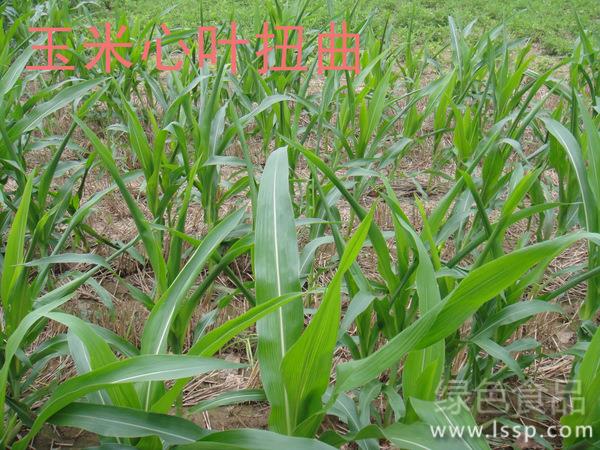
Twisted corn heart leaves
1. Herbicide phytotoxicity.Corn symptoms: severe stunting, twisted heart leaves that cannot unfold, and branching, with no breakage on the twisted leaves. Cause: use of a post-emergence corn herbicide containing nicosulfuron. There are four reasons: 1. Domestic nicosulfuron is not pure enough, causing phytotoxicity. 2. Spraying during high temperatures, or spraying twice over the same area, causing phytotoxicity. 3. Corn beyond the 5-leaf stage, or spray liquid getting into the heart, causing twisting, leaf whitening, or heart rot. 4. Herbicide applied too late, producing onion-tube-shaped leaves; this mainly occurs in certain hybrid corn varieties that are sensitive to the herbicide, and the tassel cannot emerge normally.
Preventive measures: after phytotoxicity occurs, if the corn heart leaves are not very severely twisted and tassel emergence is not affected, apply additional nitrogen fertilizer and water, and the corn can return to normal growth after one week. If the twisting is severe, the twisted heart should be broken open, and fertilizer and water should be applied, along with foliar fertilizer plus zinc and boron fertilizer.
2. Caused by insect pests.Mainly damage by thrips and the Swedish fly. After peeling back the outer leaves, the base of the heart leaf is already shrunken and has broken holes. Main symptoms: corn heart leaves are twisted, leaves are damaged and shrunken, and rows of holes appear on the leaves. There is a transparent film-like substance on the upper surface of corn leaves, and some heart leaves contain mucus; the heart leaves cannot extend normally and become twisted into a “finely twisted shape” or “cow tail shape”, and a few heart leaves have already broken off. The main cause: summer corn at the 5-6 leaf stage is damaged by thrips or the Swedish fly.
Preventive measures: early control should be carried out; applying chemicals after the heart leaves have curled gives poor results. First, at the corn seedling stage, use 20 grams of 10% imidacloprid wettable powder or 20-30 grams of 5% acetamiprid wettable powder per mu, mixed with 30 kg of water for spraying. Apply to the corn heart leaves. In the middle and late stages, the damaged corn heart leaves should first be broken open by hand to open the twisted part, then treated with chemicals, with some foliar fertilizer added.
3. Physiological disorders.Applying too much nitrogen fertilizer, too aggressively, leading to excessive vegetative growth, is also related to varietal characteristics.
Preventive measures: after discovery, peel open by hand to assist tasseling.
4. Weather causes.Continuous heavy rain and low temperatures are unfavorable for corn growth, causing physiological imbalance in corn. Some corn varieties that are more sensitive to climate and environment are especially affected. This weather can cause corn to grow a “cow tail”: the upper leaves wrap together and bend downward, preventing the corn from heading normally.
Preventive measures: immediately cut off the upper 1/4 of the corn leaves with scissors, or slit them open vertically with a knife, to break open the twisted heart, and supplement with zinc fertilizer; spray foliar “gibberellin” (1 gram mixed with 15-30 kg of water) or Tianfengsu (1000-fold solution) and other plant growth regulators, once every 5-7 days, for 2 consecutive sprays.