How to prevent and control dead seedlings caused by okra fusarium wilt
With the improvement of people's living standards, many vegetables never seen before have been added to ordinary people's dining tables, for example: okra. Fusarium wilt is also one of the main diseases harming okra. Its damage symptoms and control methods are described below.
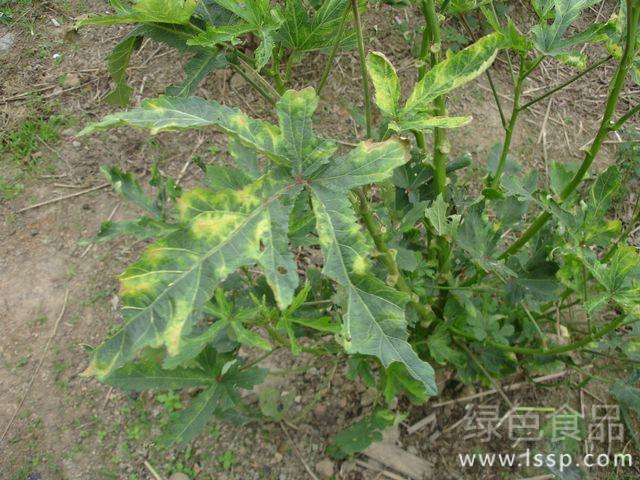
Okra fusarium wilt
1. Symptoms: Okra fusarium wilt occurs when Fusarium invades the plant's vascular bundle tissue. Its typical symptom is wilting of branches and leaves. In the early stage of the disease, the leaves of the affected plant gradually wilt from top to bottom, as if lacking water, and the wilting symptom becomes more obvious around noon, but it can still recover in the early morning and evening when the temperature is low and humidity is high. After several days, the condition worsens, and the whole plant wilts and droops, or even dies. Observing the base of the affected okra plant, water-soaked lesions can be found, which later turn yellowish-brown or dark brown, and when the neck is cut open, the vascular bundles can also be seen turning brown. The pathogen spreads through soil and can also occur through seed-borne infection. The pathogen has a long latent period, making control difficult. Farmland with heavy clay soil, low-lying terrain, a high groundwater table, poor drainage, and poor ventilation is more prone to occurrence; excessive nitrogen fertilizer, insufficient phosphorus and potassium fertilizer, or application of undecomposed poultry and livestock manure also makes occurrence more likely.
2. Control methods:
1. Agricultural control: Implement rice-upland crop rotation, which is the most basic control measure, and the rotation cycle should be as long as more than three years. Build deep furrows and high beds, lower the groundwater table, and improve the drainage capacity of farmland soil, which can significantly reduce disease incidence. Reasonably increasing the application of phosphorus and potassium fertilizer can improve the disease resistance of vegetable crops. When sowing and raising seedlings, seedbed soil disinfection and seed disinfection can be carried out to prevent disease before it occurs. The method of seedbed soil disinfection is to use diluted formalin solution to water the soil. Generally, 50 grams of the agent is used per square meter of seedbed, mixed with 2—4 kg of water and evenly sprinkled. After watering, cover the soil surface with a layer of plastic film, seal it for 4—5 days, then uncover it, and rake the surface soil loose so that residual chemicals volatilize and disperse. Sow half a month later to avoid chemical injury to young tender seedlings; seed disinfection can use hot water seed soaking. First soak the seeds in room-temperature water for 15 minutes to promote germination of the pathogens on the seeds, then put them into hot water at 55—60 degrees for 15 minutes (the water temperature must be kept unchanged during this period) to kill the pathogens. To make the seeds heated evenly, stir continuously until the water temperature drops to 35 degrees, then stop stirring, and continue soaking for 6 hours before removing, then sow after germination promotion.
2. Chemical control: In the early stage of the disease, watering the roots with chemicals gives obvious sterilization. The following chemicals can be selected: 1. 50% carbendazim 500-fold dilution; 2. 40% Kang Kuning 800—1000-fold dilution; 3. 77% Kocide wettable powder 600—800-fold dilution; 4. 50% Banzhongshuang wettable powder 500-fold dilution. Water the roots once every 5—7 days, for 3—4 consecutive times. At the same time, promptly pull out the affected okra plants and destroy them.