Causes of Watermelon Vine Death and Wilting and Control Methods
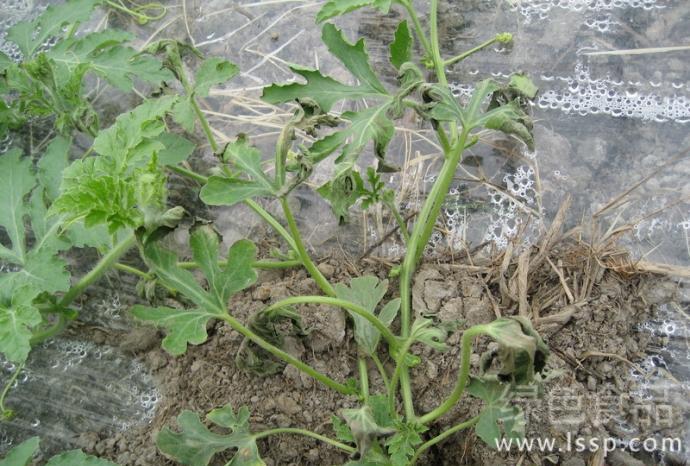
Watermelon Wilting
Watermelon vine death is caused by soil-borne fungi and can occur at both the seedling and mature plant stages. In the later stages of watermelon growth, with high temperatures and frequent rain, the disease develops rapidly and severely. Generally, if the rainy season arrives early, lasts a long time, and brings heavy rainfall, the disease occurs early and is severe. The peak of watermelon vine death often follows closely after the peak of rainfall, and the disease can occur at temperatures from 5°C to 37°C.
Symptoms: On watermelon leaves, the disease produces circular or irregular dark green water-soaked lesions; under high humidity they rot, and when dry the lesions turn light brown and readily crack. On the base of the vine, spindle-shaped water-soaked dark green sunken lesions appear, severely rotting and encircling the stem, with everything above the diseased part dying completely. On the watermelon fruit, dark green circular water-soaked sunken lesions form, then rapidly spread to the entire fruit, causing the fruit to rot and give off a silage-like odor, with dense white mycelium covering the surface of the diseased area.
Control methods: At the early stage of the disease, spray with 50% dimethomorph-copper wettable powder at 700-800 times dilution, 72.2% propamocarb aqueous solution at 800 times dilution, 64% oxadixyl-mancozeb wettable powder at 500 times dilution, etc., spraying once every 7-10 days for 3-4 consecutive sprays. If necessary, the above solutions can also be used to drench watermelon roots, with 0.4-0.5 liters per plant. Applying both spray and root drench together gives better results.