Melon Ripeness Affects Quality: Detailed Key Points for Harvesting Ripe Melons
Melon quality is closely related to melon ripeness. If the fruit is not ripe enough, it will have low sweetness and insufficient aroma, but if it is harvested too late, the flesh becomes soft, the flavor is poor, and its edible value is also reduced. Harvesting early at the right time brings good economic returns. Generally, melons sold locally are harvested when fully ripe; melons for export should be harvested 3 to 4 days before full ripeness, when they are 80% to 90% ripe. At this time, the harvested melons are firm and store and transport well, and by the time they are sold, they have also become fully ripe. The suitable harvest time for melons is when the sugar content reaches its highest point but the melon flesh has not yet become soft.
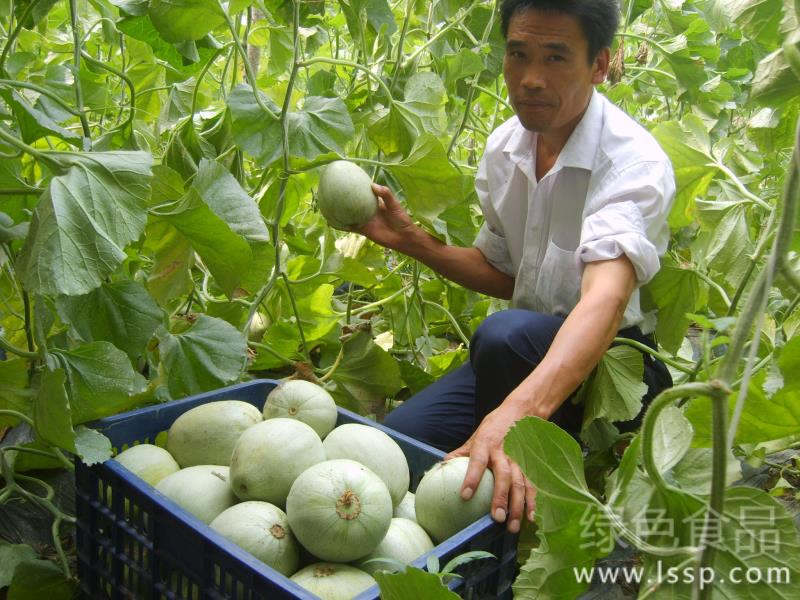
Melon Harvesting
The characteristic features of that melon variety should be fully expressed. Generally, when melons ripen, the skin color changes. Green turns grayish green or yellow; white turns milky white or yellow; light green turns white, and so on. At the same time, the skin of a ripe melon is glossy and the markings are clear. Some melon varieties can also give off fragrance. For varieties with ridges and grooves, the ridges and grooves become obvious when ripe. For varieties with netting, when the netting on the fruit surface becomes prominent and hardened, it indicates ripeness.
Changes in the melon stalk and the top of the melon. Most early-maturing melon varieties shed from the stalk easily, while late-maturing varieties do not. After melons ripen, the fine hairs around the melon stalk fall off, the navel at the top of the melon begins to soften, and an abscission layer forms around the fruit stalk, producing cracks, and so on. For varieties that shed from the stalk, the most suitable harvest time is when cracks appear but the melon has not yet detached from the stalk.
Time from flowering to ripening. The time required from flowering to melon ripening differs greatly among varieties. Thin-skinned melons take 25 to 30 days; thick-skinned melons take 35 days for early-maturing varieties and 50 days for mid-maturing varieties. When flowering and pollinating, hang a tag as a marker and note the pollination date, then judge the harvest time according to the development period of that melon variety; however, the development period of melons of most varieties has a range of 5 to 7 days. For example, when cultivated in a high-temperature period, harvest can be 5 to 7 days earlier; when cultivated in a low-temperature period, with lax pruning and high water and fertilizer conditions, especially with more nitrogen fertilizer and luxuriant branches and leaves, harvest should be delayed by 5 to 7 days.