How to prevent and control rot caused by cracked celery leaf stalks
During the growth of celery, especially in the middle and late stages, the base of the celery stem and the leaf stalks crack at the same time, which not only affects the quality of the celery, but also makes it easy for pathogens to infect it, causing the celery to become moldy and rot.
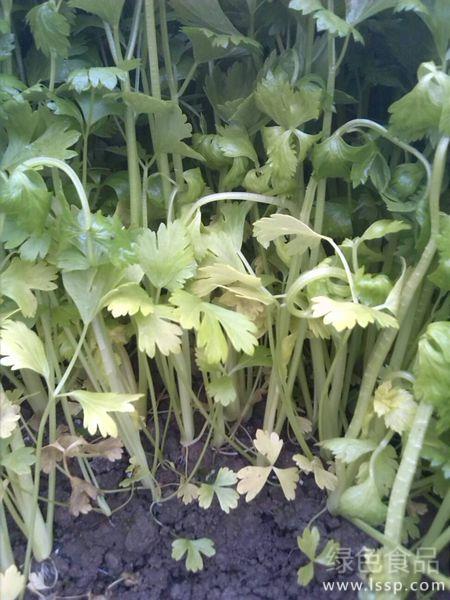
Celery leaf stalk cracking
1. Symptoms: cracks appear on the stem and the base of the stem, showing straight or wavy splitting. The outer leaves of the plant tend to turn yellow, and pathogens take the opportunity to invade, causing rot. Boron deficiency in celery can also cause longitudinal or transverse cracking, and the leaf stalks split, so attention must be paid to distinguishing between them.
2. Causes
1. Variety degeneration: celery naturally crossbreeds with ordinary celery.
2. Boron deficiency in the soil: when too much nitrogen and potassium fertilizer is applied to the soil, it often inhibits celery's absorption of boron, and can also cause boron deficiency in celery. This is the main cause of celery leaf stalk cracking.
3. The plant is frozen: celery is not tolerant of severe cold. When the temperature is low, it is easily frozen, and after the temperature rises again, the tissue cannot recover, thus leading to hollowing or cracking.
3. Prevention and control methods
1. Apply more organic fertilizer, advocate the use of soil-testing formula fertilization technology to prevent excessive application of nitrogen fertilizer. Improve the soil, increase the soil's drought resistance, strengthen water and fertilizer management, drain promptly after rain, and water frequently with small amounts, keeping the soil neither dry nor wet. Do not let it alternate between dry and wet or use flood irrigation.
2. For plots that have been planted with celery for consecutive years, it is necessary to diagnose the content of nitrogen, phosphorus, potassium and boron fertilizer in the soil. If boron is already deficient, 0.8 kg of borax per mu can be applied during formula fertilization to supplement boron fertilizer, but it must not be excessive.
3. During the celery growing period, spray a 0.2%~0.3% borax solution on the leaves, and spray once more after 5~7 days.
4. Summer cultivation requires protection against high temperatures. Where conditions permit, the use of shade umbrellas is advocated to reduce the harm of high temperatures to celery.
5. When saving celery seed, it must be strictly isolated from other celery varieties.