How to control soft rot in potatoes during storage
Potato soft rot, which damages potato tubers during storage, is a bacterial disease. It occurs every year, generally reducing yields by 3% to 5%, and often infects together with potato dry rot, causing relatively large losses. The damage symptoms and control methods of potato soft rot are described below:
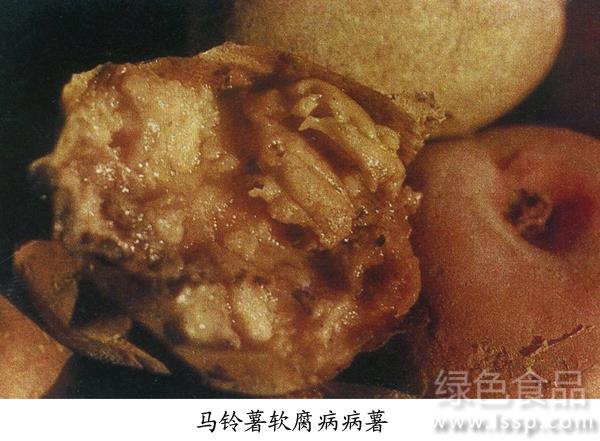
Potato soft rot
I. Damage symptoms
Soft rot generally occurs on potato tubers during the late growth stage before harvest and during storage. On infected tubers, the lenticels are slightly sunken, brown or brownish, with a water-soaked surrounding area. Under dry conditions, the lesions harden and dry out, and the necrotic tissue becomes sunken. When it progresses to rot, the soft rot tissue is moist and creamy or brownish, with soft granular material. The boundary between infected and healthy tissue in potatoes is distinct, and the edges of the lesions have brown or black pigment. In the early stage of rot there is no odor; after secondary infection, there is a foul odor, slime, and sticky material.
II. Transmission routes
Potato soft rot is a bacterial disease. The common pathogens of soft rot are variants of Erwinia carotovora and variants of Erwinia carotovora subsp. atroseptica, both of which are anaerobic bacteria and are easily spread in water. The infection cycle of soft rot is similar to that of blackleg. It enters through other lesions, forming secondary infections and mixed infections. Previously infected mother potato plants infect daughter tubers through stolons. Warm, high-humidity, oxygen-poor conditions favor potato tuber soft rot. When the soil temperature is 20 to 25°C or above 25°C, harvested potato tubers become highly susceptible. Poor ventilation, waterlogging in the field, and the anaerobic environment caused by a water film on potato stems after washing favor the occurrence and development of the disease. Applying too much nitrogen fertilizer also increases susceptibility.
III. Control methods
1. Strengthen field management, pay attention to ventilation and light penetration, and reduce field humidity.
2. Promptly pull out diseased potato plants and disinfect with lime to reduce sources of primary infection and secondary infection.
3. Avoid flood irrigation.
4. Spray 50% Baijuntong wettable powder at 500 times dilution, or 12% Lülütong emulsifiable concentrate at 600 times dilution, 47% Jiaruinong wettable powder at 500 times dilution, or 14% copper complex ammonia aqueous solution at 300 times dilution.