Control Methods for Jujube Fruit Shrinkage Disease Causing Shriveled and Dried Jujube Fruits
Jujube fruit shrinkage disease is caused by infection from two types of pathogens: bacteria and fungi. The occurrence of this disease is closely related to different varieties, nutrient imbalance, and abnormal climate effects. In northern jujube-growing areas, symptoms generally begin to appear from mid-July to early-to-mid August; when temperatures are relatively high and rainfall is plentiful, the disease occurs early, and from mid-August to early September, during the jujube fruit coloring stage, it reaches its peak period. If there is continuous rainy weather or rainy nights followed by clear days, it can easily break out into a disaster. Applying too much nitrogen fertilizer and having an unbalanced nutrient profile leads to more occurrences of fruit shrinkage disease. With low fertilizer application and insufficient nutrients, fruit shrinkage disease can also occur severely. The control methods are as follows:
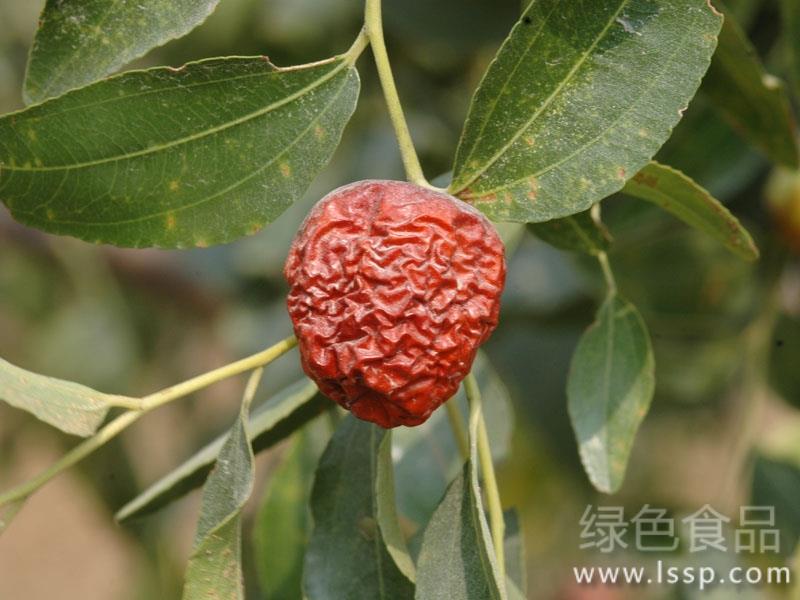
Jujube Fruit Shrinkage Disease
1. Select and plant disease-resistant varieties.
2. Strengthen jujube tree management to reduce the occurrence of fruit shrinkage disease. Apply more farmyard manure to strengthen tree vigor and improve the jujube tree's own disease resistance. In autumn (after August 20), apply 40 kg of 25% organic-inorganic compound fertilizer per tree plus 1 kg of biological bacterial fertilizer + 15 g of boron fertilizer or 5 g of borax; in summer, apply a topdressing of 1/3 diammonium phosphate fertilizer + 2/3 urea mixed fertilizer, 1-2 kg per tree. During high temperature and drought from June to August, decide the number of waterings based on rainfall conditions to meet the jujube fruit's water and fertilizer requirements for growth and development. Prune reasonably to facilitate ventilation and light penetration for the jujube trees.
3. Chemical control.
① When about 30% of jujube trees are flowering, spray with 300 times borax + 10-20 mg/kg gibberellin + 0.9% abamectin 5000 times solution. Spray once every 7 days, for 2 consecutive sprays.
② During the jujube fruit expansion period (mid-July to late August), use 10% difenoconazole (Score) 1500 times solution + 72% agricultural streptomycin 4000 times solution + boron-calcium treasure 1000 times solution + 0.9% abamectin 5000 times solution or 2.5% beta-cyhalothrin EW (Kung Fu) 2500 times solution, spray once every 10 days, also controlling anthracnose, black spot disease, and insect pests.