Late southern rice is greatly affected by typhoons during the regreening and tillering stage, how should it be managed?
This year, the transplanting period of double-cropping late rice in the south was affected by typhoons and heavy rain, causing delays in the transplanting progress of late rice in some areas, and the late rice already transplanted grew relatively slowly due to the impact of rainfall. As of now, late rice transplanting has basically ended, and the crop has successively entered the regreening and tillering stage. In terms of management, corresponding measures should be taken to manage early and promote early development, build a good high-yield plant framework, and lay the foundation for sufficient panicles and large panicles.
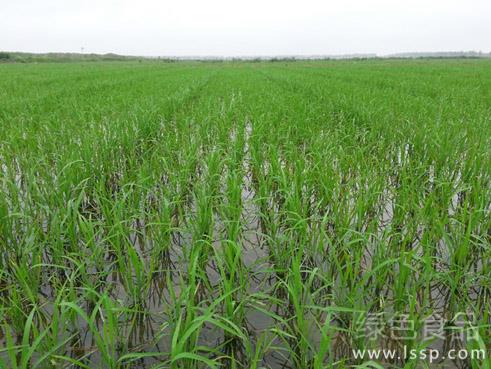
Late rice regreening and tillering stage
I. Fertilizer and management according to the seedlings
Carry out field management according to different seedling conditions: First, for late rice fields transplanted relatively late, because the vegetative growth period and effective tillering period are shortened, topdressing should be applied early and heavily, striving to reach the target seedling number by the critical leaf age stage for effective tillering. Second, for late rice fields transplanted relatively early, with insufficient seedling number or already sufficient seedlings but uneven growth, combined with draining and sunning the field, apply one supplementary fertilizer according to the seedlings to help the rice plants grow evenly, strengthen tillers and promote panicles. Third, for fields with good growth and sufficient seedling number, do a good job of draining and sunning the field, control ineffective tillering, reduce nutrient consumption, and achieve high yield.
II. Apply tillering fertilizer early
The effective tillering period of late rice is short, so it is necessary to transplant early and manage early, manage while transplanting, and manage promptly when transplanting is late. In addition to applying sufficient basal fertilizer, tillering fertilizer should be applied early and frequently to promote early and rapid growth of the rice plants. The specific application method: in the early stage (from transplanting to the effective tillering stage), apply fertilizer 2-3 times. The first time, 4-6 days after transplanting (or seedling throwing), apply a light fertilizer to induce rooting and promote tillering, applying 5 kg of urea per mu, and apply it together with chemical herbicides; the second time, 8-10 days after transplanting, apply a heavy fertilizer for tillering and strengthening seedlings, applying 8-10 kg of urea per mu; the third time, about half a month after transplanting, depending on the growth of the rice seedlings, apply a supplementary balanced fertilizer, applying 2-3 kg of urea and 5-7 kg of potassium chloride per mu, to promote balanced growth of the rice seedlings and strong tillers. At the same time, regulate the seedling number according to the high-yield plant framework, requiring hybrid rice to reach about 200,000-250,000 seedlings per mu in 15-20 days, and conventional late rice in 20-25 days. On this basis, quickly shift to fertilizer control of seedlings, inhibit ineffective tillering, and control the seedling number of hybrid rice at about 300,000 and conventional rice at 350,000 seedlings.
III. Frequent shallow irrigation and timely field sunning
After throwing (transplanting) late rice seedlings, in the early stage, irrigate shallowly and change water frequently to lower soil temperature and water temperature, prevent scalding the seedlings, and promote tillering; during the tillering stage, manage water by frequent shallow irrigation and intermittent moistening, with the water layer depth generally not exceeding 3-4 cm, and after it dries naturally, irrigate the second time; at the late tillering stage, according to seedling conditions, climate and soil conditions, drain and sun the field in a timely manner to control ineffective tillering and create conditions conducive to strong stems and large panicles. Field sunning should be timely and moderate. Generally, about 20 days after transplanting, when the seedling number reaches the planned number, begin field sunning. Field sunning should proceed from light to heavy, carried out in stages. The requirement for field sunning: dry on the top and wet below, mud does not stick to the hand, and heavy sunning must be avoided, especially for hybrid rice, where moderation should be controlled even more.
IV. Integrated control of diseases and insect pests
During the tillering stage of late rice, the main diseases and insect pests are: rice leaf roller, rice planthopper, striped stem borer, rice sheath blight, rice blast, etc. At the same time, attention should be paid to preventing and controlling southern rice black-streaked dwarf disease in late rice. Therefore, while doing a good job of fertilizer and water management, measures should be adapted to local conditions, do a good job of disease and insect pest forecasting, accurately grasp the dynamics of disease and insect pest occurrence, select appropriate pesticides, and carry out timely control work, effectively eliminating diseases and insect pests in the bud stage, and laying the foundation for ensuring increased production and a bumper harvest of late rice.