How should the fungicide Sumilex be used?
How is the fungicide Sumilex used? Please give an introduction. Sumilex is also called procymidone, dimethachlon, Suke Li, procymidone, and dimethyl dicarboximide, and is a low-toxicity pesticide. Sumilex is a protective, curative and eradicant fungicide, with moderate systemic activity, able to translocate to new leaves, with protective and curative action, and a residual...
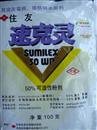
How is the fungicide Sumilex used? Please give an introduction
Sumilex is also called procymidone, dimethachlon, Suke Li, procymidone, and dimethyl dicarboximide, and is a low-toxicity pesticide. Sumilex is a protective, curative and eradicant fungicide, with moderate systemic activity, able to translocate to new leaves, with protective and curative action, and a residual effect of about 7 days. Sumilex is mainly used to control gray mold on tomato, pepper, Chinese chives, scallion, cucumber, snap bean, strawberry and eggplant; it has good efficacy against sclerotinia rot of cucumber and rapeseed; the product can also be used to control diseases of vegetables and fruits during storage.
The common formulation of Sumilex is a 50% wettable powder. When controlling gray mold and sclerotinia rot, use 30-50 grams each time per mu, dilute in 50 kg of water and spray, then apply the pesticide again after 7 days.
When using Sumilex, the points to note are:
1. To control gray mold, apply the pesticide in the early stage of the disease, and when spraying, apply the pesticide to every part of the crop.
2. It must not be mixed with alkaline pesticides so as to avoid reducing the efficacy.
3. It is not advisable to mix it with organophosphorus pesticides, so as to avoid causing phytotoxicity.
4. After the pesticide is mixed, spray it as soon as possible; do not leave it standing for a long time.
5. Long-term single use of Sumilex easily causes the pathogen to develop resistance, so it should be used in rotation with other fungicides.
Click to get more fungicide application techniques
Click to get more pesticide application techniques