Wilt disease causes plants to shrivel: how to prevent and control onion wilt disease
Onion, also known as bulb onion, is tolerant of transport and storage. Its enlarged fleshy bulb is the edible part, with a distinctive spicy flavor that can stimulate appetite and help treat a variety of diseases; it is not only storage-tolerant but can also be dehydrated and processed. Wilt disease is one of the more common diseases of onion during the growing process. The symptoms and control methods of onion wilt disease are as follows:
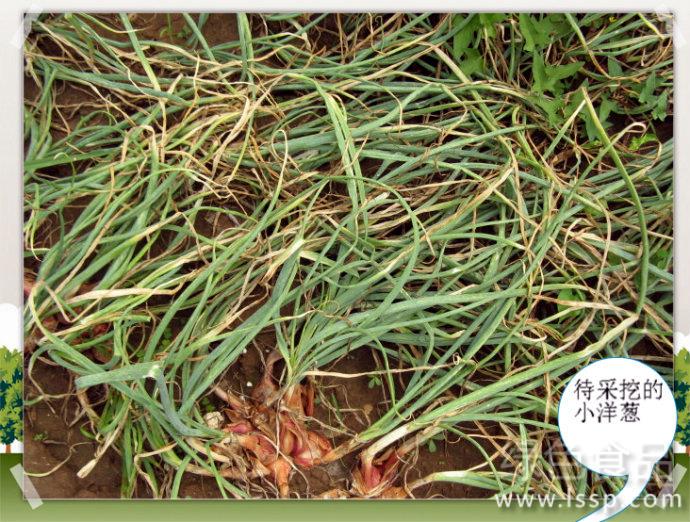
Onion wilt disease
1. Symptoms: The leaves first turn yellow and gradually develop upward. In severe cases, the plants wilt, and the entire leaves wither, scorch, and drop off. In infected onion plants, the root system develops poorly, the root cortex rots, and there are few or no new roots, so the plants are easily pulled up. When the roots and stem are cut open or the stem cortex is peeled off, yellow-brown to dark brown vascular bundles can be seen.
2. Disease development pattern: The pathogen of wilt disease has strong saprophytic ability. After diseased residues decompose, the pathogen can still survive in the soil for about 5 years, and seeds can also carry the pathogen. The pathogen of wilt disease invades through wounds on the onion roots or through cells at the root tips. The disease is most severe when the daily average temperature rises to 24-28°C. When the relative humidity is above 80%, especially when the soil moisture content is high, the disease develops rapidly. In low-lying land, where fertilizer is insufficient and phosphate and potassium fertilizers are lacking, where the soil texture is heavy and the soil is acidic, and where undecomposed fertilizer is applied, the disease is severe.
3. Control methods
1. Agricultural control: Implement crop rotation, select disease-resistant (tolerant) varieties, apply sufficient fully decomposed organic fertilizer free of the pathogen, and increase the application of phosphate and potassium fertilizers. For cultivation in low-lying land, use high beds or semi-high beds covered with plastic film, prevent flood irrigation, drain water promptly after rain, and ensure no water accumulates in the field.
2. Chemical control When individual diseased onion plants are found in the field, immediately drench with a medicinal solution. You can use 50% carbendazim wettable powder at 500 times dilution, or 60% Fangmeibao wettable powder at 600 times dilution, or 50% benomyl wettable powder at 1000 times dilution, or 12.5% enhanced carbendazim soluble concentrate at 200-300 times dilution, or 12.5% Zhiweiling aqueous solution at 200-300 times dilution, or 15% hymexazol aqueous solution at 1000 times dilution, 35% Fu middot Jia wettable powder at 900 times dilution, or 5% Junduqing aqueous solution at 400 times dilution to drench the onion roots, applying 100 mL of diluted medicinal solution per plant, and drench again after 7-10 days.