Potato late blight causes potatoes to lose their value; how can it be prevented and controlled?
Potatoes infected with late blight accumulate and pass on the disease across generations through asexual reproduction via tubers, causing the seed quality of the tubers to deteriorate, yields to decline continuously, and the potatoes to lose their value, so they cannot be kept as seed for further production. There are 2 methods for preventing and controlling potato late blight:
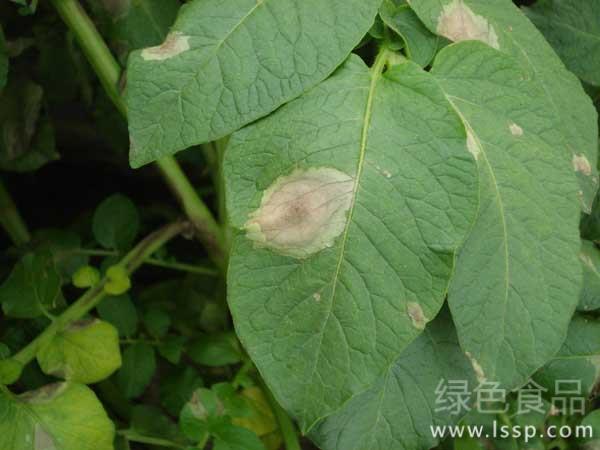
Potato late blight
(1) Preventive measures
(1) Select disease-resistant varieties: Potato disease-resistant varieties include: for starch processing, the virus-free Xiazhai——65; for table use, highly resistant varieties such as Qingshu No. 9 and Qingshu No. 2. Different production areas can choose according to local conditions.
(2) Select disease-free seed potatoes to reduce the initial infection sources. In every step, including autumn harvest and storage in the cellar, cellar inspection during winter storage, removal from the cellar, cutting into pieces, and vernalization, diseased potatoes must be strictly removed each time, and vigorous seed potatoes with smooth skin and weighing about 100 grams should be selected; where conditions permit, disease-free seed potatoes should be purchased.
(3) Seed dressing with chemicals: 70% Dexon wettable powder, used at 0.1% of the seed weight; be sure to sow immediately after dressing.
(4) Agricultural control
① Crop rotation: prevent continuous cropping, and carry out a rotation of more than 3 years with non-solanaceous crops.
② Cultivate disease-free strong seedlings: apply sufficient base fertilizer, use balanced fertilization, avoid excessive nitrogen fertilizer, and increase phosphorus and potassium fertilizer. After full emergence, remove weeds promptly.
③ Reasonable close planting: plant 3900 plants per mu, which can improve field ventilation and light conditions, reduce field humidity, and lessen the occurrence of disease;
(2) Treatment measures: when potatoes enter the early flowering stage, if continuous rainy weather occurs, inspect frequently and detect early; in the early stage of disease, promptly remove diseased leaves and diseased fruits and pull out severely diseased plants. When the disease is more severe, clear out the central diseased plants, diseased leaves, etc., and promptly use systemic treatment chemicals such as 58% metalaxyl wettable powder at 400 times dilution or 64% Sandofan wettable powder at 500 times dilution, applying once every 5—7 days for 2-3 consecutive applications.