Rice management methods during the heading and grain-filling stage affect yield levels
The heading and grain-filling stage of rice refers to the period from heading to maturity, including heading, flowering, grain filling, and maturity. It generally takes about 35-45 days. During this period, vegetative growth basically stops, and the growth center shifts to the formation and filling of the grains, making it the critical period that determines the seed-setting rate and the thousand-grain weight. The main field management measures are scientific water management, judicious application of grain fertilizer, and pest and disease control.
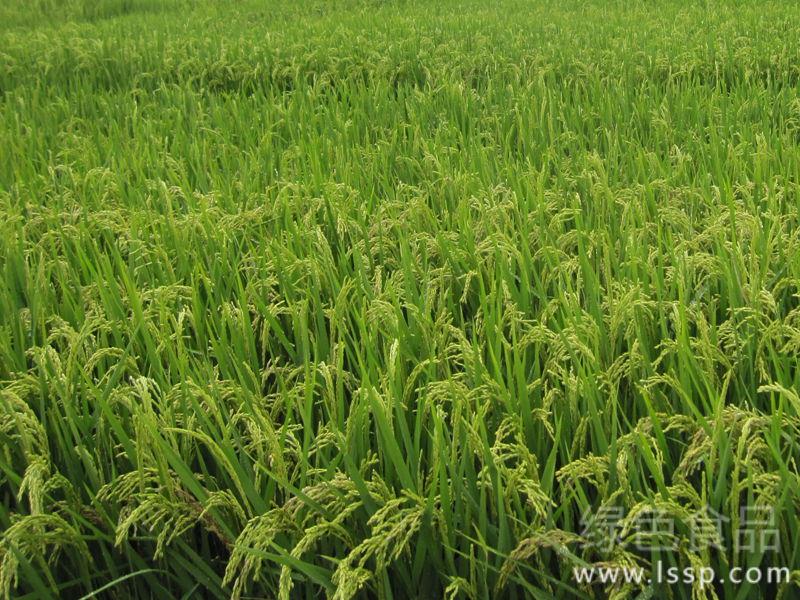
Heading and grain-filling stage of rice
1. Scientific water management. Water management principles: keep water at heading, moist irrigation during grain filling, and timely drainage. Keep water at heading: during the heading and flowering stage of rice, if the paddy field is dry, pollen and stigmas easily dry out and cannot pollinate, and heading may even become difficult; therefore, during the heading and flowering stage, a certain water layer should generally be maintained in the field, and it is best to irrigate with fresh water once every 2-3 days to avoid dehydration and drought. Moist irrigation during grain filling: after rice flowering and pollination, the grains develop and fill through grain filling. During the grain-filling stage, water is both needed and feared, because in the late stage of rice the aeration tissue degenerates, the conditions for transporting gas from leaves to roots are poor, and when there is too much soil water and insufficient oxygen, the root system is prone to premature aging. Adopting moist irrigation and a water management approach based mainly on “alternating dry and wet” not only meets the water and fertilizer needs during the grain-filling stage, but also achieves the goals of increasing aeration to promote roots, using roots to nourish leaves, and using leaves to plump grains. Timely drainage: after rice turns yellow and ripe, physiological water demand declines, so drainage should be carried out in a timely manner, but drainage should not be too early. Draining too early reduces dry matter accumulation and lowers grain weight. The timing of drainage depends on the paddy field. Generally, fields can be drained about one week before harvest, deep muddy fields about half a month, and sandy fields 3-5 days, so as not to “force maturity by drying” and affect grain weight while also favoring harvest.
2 Judicious application of grain fertilizer. The topdressing applied at or around the heading stage of rice is called grain fertilizer, also called “grain-plumping fertilizer.” Applying grain fertilizer is mainly for paddy fields with little base fertilizer, poor water and fertilizer retention, insufficient later-stage vigor, and faded leaf color before heading. When the weather is clear, spread 2-3 kg of urea per mu at the full heading stage, mainly to extend the functional period of the leaves, accelerate grain filling, and increase grain weight. If the temperature is low and it is cloudy and rainy, it is better not to apply nitrogen fertilizer; instead, foliar topdressing can be used, spraying 1% concentration urea and 0.3% potassium dihydrogen phosphate on the leaf surface in the afternoon, which can promote grain filling and increase filled grains and grain weight.
3 Pest and disease control. During the heading and grain-filling stage of rice, panicle neck blast, bacterial leaf blight, stem borers, rice planthoppers, leafhoppers, and others often occur. Timely control should be carried out according to forecasts and field inspections to avoid losses. To control panicle neck blast, when 5% of the boot has split, use 30-40 g of 75% tricyclazole, dilute with 50 kg of water, and spray on the leaf surface for control; after full heading, spray 1-2 more times to prevent branch blast and grain blast. For bacterial leaf blight, use 200 g of yekuling diluted with 50 kg of water and spray for timely control. For stem borers, control in a timely manner according to the forecast time, using 20 ml of 50% fenitrothion per mu, diluted with 50 kg of water. For rice planthoppers and leafhoppers, control can be done with 10 g of 10% imidacloprid wettable powder diluted with 40-50 kg of water, or 10-20 g of 10% yibianjing per mu diluted with 50 kg of water.