Tomato mosaic virus causes yellow-green leaves and affects yield, how to prevent and control it?
Tomato mosaic virus mosaic: shows mottling with uneven shades of green, leaves do not become smaller, are not deformed, plants are not stunted, and the impact on yield is small. Yellow-green leaves: leaves are uneven and bumpy, new leaves become smaller, slender, deformed and twisted, leaf veins turn purple, plants are stunted, the flower bud differentiation ability of tomatoes declines, flowers and buds drop, tomatoes are small and of poor quality with a mottled face-like appearance, the impact on yield is very great, and diseased plants have reduced yield compared with healthy plants.
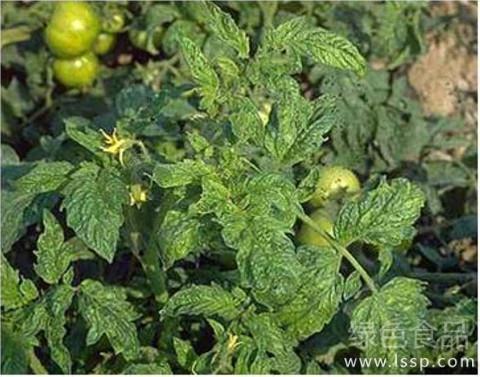
Tomato mosaic virus
Disease-inducing factors: fields with too much nitrogen fertilizer application, overly dense sowing, many years of continuous cropping, insufficient fertility, rough cultivation and poor management, and large amounts of tomato virus-infected diseased residues are prone to the disease. Seeds carrying virus, farmyard manure carrying virus, field nematodes, and many chewing pests lead to severe disease. Prevention and control methods:
(1) According to local conditions, reasonably select disease-resistant tomato varieties. Do not plant adjacent to tobacco.
(2) When removing side shoots, pruning, and tying vines, handle healthy plants first and diseased plants afterward. Hands that have touched diseased tomato plants should be disinfected with soapy water to prevent the virus from spreading through farming operations.
(3) Before sowing, clear weeds in the field and around it, burn them in a centralized manner or compost them; deeply plow the land to destroy stubble, promote the decomposition of diseased residues, and reduce pathogens and pest sources.
(4) Choose fields with convenient irrigation and drainage for planting tomatoes, open drainage ditches well, lower the groundwater level, and achieve no standing water after rain stops; after heavy rain, promptly clear the ditch system to prevent moisture retention and reduce field humidity.
(5) During high temperature and drought, water scientifically to increase field humidity and reduce the damage of aphids and small brown planthoppers. Grass can also be laid between tomato rows to retain moisture, etc., which helps reduce the disease. Continuous irrigation and flood irrigation are strictly prohibited.
(6) Apply compost fermented with effective microorganisms or decomposed organic fertilizer to tomatoes, do not use bacteria-carrying fertilizer, and organic fertilizer must not contain tomato diseased residues; use formula fertilization, appropriately increase the application of phosphorus and potassium fertilizers, strengthen field management, cultivate strong seedlings, enhance tomato disease resistance, and help reduce the disease.