Pepper virus disease causes severe yield loss, how to prevent and control it?
Pepper virus disease has a wide occurrence range and is extremely damaging; in mild cases it reduces yield by 20-30%, and in severe cases losses reach 50-60%. It is one of the common and important diseases in pepper cultivation.
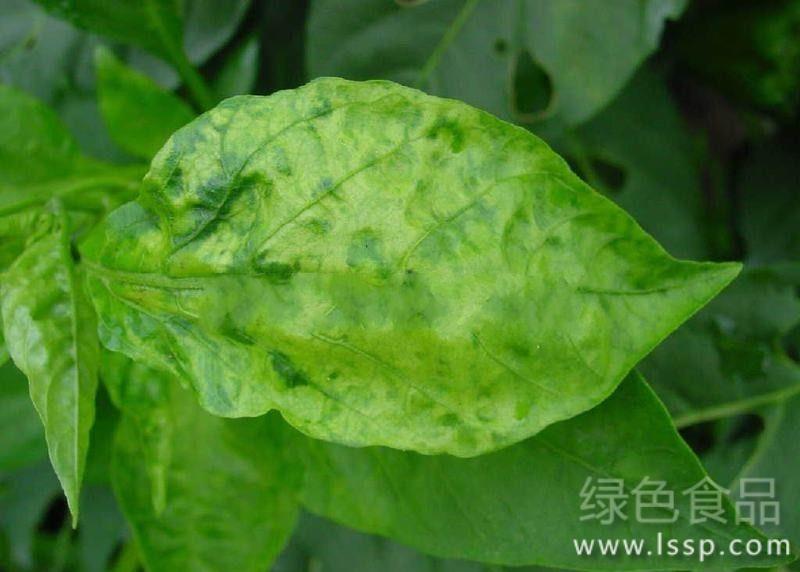
Pepper virus disease
Symptoms of damage: 1. Mosaic type, diseased pepper leaves show yellow-green mottling, wrinkling, or brown necrotic spots. 2. Leaf deformity or rosetting type, at first the veins of the pepper heart leaves fade green, forming uneven mottling, the leaf surface wrinkles, later the diseased leaves thicken, showing yellow-green mottling or large yellow-brown necrotic spots, and the leaf margins curl upward. Young leaves become narrow and in severe cases appear thread-like, and later the upper internodes of the pepper plant shorten and become clustered. Severely diseased fruits have uneven green mottling and raised wart-like protrusions on the surface. 3. Striped spot type, the main veins of pepper leaves become brown or black and necrotic, spreading along the petiole to the side branches and main stem, showing necrotic striped spots, causing early leaf drop, flower drop and fruit drop, and in severe cases the whole plant dies.
Disease pattern: Pepper virus disease is mainly caused by cucumber mosaic virus and tobacco mosaic virus. Cucumber mosaic virus has a wide host range, including many vegetable crops, and is mainly spread by aphids (such as the green peach aphid). Tobacco mosaic virus can survive for a long time in the dried diseased pepper plant residues, can also be carried by seeds, and spreads and infects through sap contact. Usually under high temperature and drought, when aphids are severely damaging, cucumber mosaic virus damage is also severe; years of continuous cropping, low-lying land, lack of fertilizer or application of undecomposed organic fertilizer can all aggravate the damage of tobacco mosaic virus.
Control methods: 1. Select disease-resistant pepper varieties such as Zhongjiao No. 2, Tianza No. 2, Shuangfeng, Zhongjiao No. 4, Zaofeng No. 1, Sujiao No. 2, Sujiao No. 3, and Nongfa. 2. Clean the field, avoid continuous cropping, and carry out a 3-4 year rotation with onion and garlic crops, legumes, and cruciferous vegetables. 3. Use silver-gray film to repel aphids and yellow boards to trap aphids. 4. Carry out chemical control; in the early stage, focus on controlling aphids to reduce virus-transmitting vectors (control of vegetable aphids). 5. Cultivate strong seedlings, cover with plastic film, transplant at the proper time, and strengthen water and fertilizer management to enhance the disease resistance of pepper plants.