Do a good job of autumn management in the plum orchard, and a bumper harvest next year is guaranteed
Autumn is an important period for plum trees to restore tree vigor and accumulate nutrients. Scientific management can increase the nutrient reserves of plum trees, promote flower bud differentiation, and lay the foundation for high-quality production the following year. The autumn management techniques for plum orchards are summarized below.
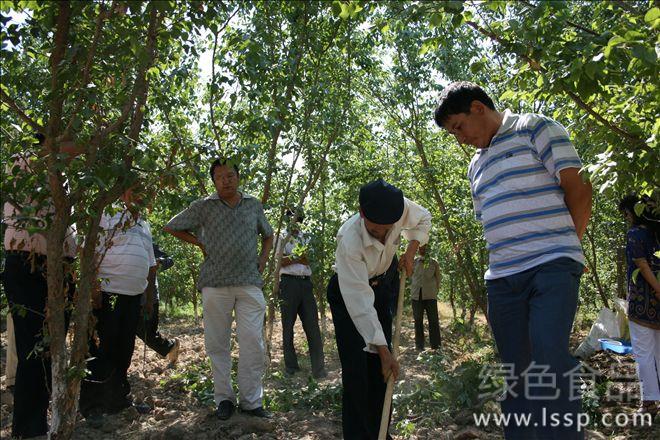
Post-harvest management of plum
I. Fertilizer and water management
1. Foliar feeding: Spray 0.3-0.5% monopotassium phosphate once as early as possible after plum harvest to improve nutrient accumulation in the plum tree, promote leaf assimilation and shoot filling, strengthen tree vigor, and help it overwinter.
2. Apply base fertilizer: From late August to early October, apply base fertilizer. For fertilizer amount, apply 20-30 kg of decomposed farmyard manure per plum tree in the initial fruiting stage; 30-50 kg in the full fruiting stage, along with 0.5-1.0 kg of urea and 1.5 kg of compound fertilizer (nitrogen: phosphorus: potassium = 15: 12: 15). Use the radial trench method, starting at 1/2 of the tree and with the outer end aligned with the outer edge of the canopy, dig 7-9 radial trenches 30-40 cm deep and about 40 cm wide, scatter in the mixed fertilizer, then cover with a layer of soil. During this period, plum roots are at their growth peak, broken roots heal easily, the fertilizer has sufficient time to rot and decompose, and the degree of mineralization is high. Some fertilizer can be absorbed and used by the plum tree in the same year, promoting leaf assimilation, manufacturing and accumulating nutrients, and meeting the plum tree's needs for sprouting, flowering, fruit setting, and growth the following year.
3. Irrigation: After fruit harvest, irrigate the first water in time. The amount of irrigation depends on soil moisture conditions, and it is best to make soil moisture most favorable for plum tree growth and development. When irrigating, open trenches 20-25 cm deep between the rows of the plum orchard, preferably with the trench direction perpendicular to the water channel, and fill the trenches level in time after irrigation. After that, determine whether to irrigate according to soil moisture conditions; irrigate once thoroughly before the soil freezes, to enhance leaf photosynthesis, promote nutrient accumulation in the tree, and help the tree overwinter.
II. Soil plowing
Generally from early September to early October, carry out soil plowing together with autumn base fertilizer application, with a plowing depth of 20-40 cm. During this period, aboveground growth of the plum tree is slow, consumption of assimilation products is relatively low, and reflux accumulation has already begun. Therefore, plowing the soil at this time coincides with the 2nd or 3rd root growth peak of the plum tree, so wounds heal easily; at the same time, new roots are easily produced, which is conducive to absorbing and synthesizing nutrients, increasing tree accumulation, and benefiting growth and development the following year. In addition, after plowing at this time, the long winter is beneficial for soil weathering and improves soil permeability. It can also eliminate underground pests and remove perennial weeds and root suckers.
III. Tree management
1. Clean the tree: Pick off all diseased and insect-damaged fruits remaining on the plum tree and bury them deeply in a centralized manner; remove root suckers sprouting from the root crown.
2. Clean the orchard: Remove aboveground weeds and fallen dead branches and leaves, and clear them out of the orchard or burn them in a centralized manner, to reduce the overwintering sources of diseases and insects.
IV. Training and pruning
After plum harvest, carry out pinching and thinning of branches together with tree cleaning. Pay attention to selecting and retaining strong branches in suitable positions, remove weak, diseased and insect-damaged, densely growing, drooping, and overly dense water sprouts in the inner canopy, and pinch the retained branches. Improve ventilation and light conditions in the tree, so as to help branches fill out and the tree overwinter, and also lay a foundation for winter pruning.
V. Disease and pest control
To protect leaves and at the same time reduce disease sources and lower the overwintering base of pests, in autumn spray the tree with 50% carbendazim 800-1000 times dilution, or thiophanate-methyl 800-1000 times dilution, or 80% mancozeb 800-1000 times dilution, or 50% thiram 800 times dilution; to control plum fruit moth and similar pests, use 2.5% deltamethrin 3000 times dilution, or 20% fenvalerate 3000 times dilution.
VI. Overwintering protection
Before the soil freezes, whitewash the trunk (add an appropriate amount of fungicide to the whitewash agent) to protect the plum tree through the winter safely.