Grape leaf premature aging causes soft berries and poor taste, how to prevent and control it?
Kyoho is a high-yielding grape variety, and in some regions it has a large cultivated area. Scientific management can easily achieve 3000-4000 kg per mu, or even higher. However, when Kyoho grapes have a high yield, it often happens that before the grapes are ripe and before the canes are fully lignified, the leaves have already aged and dried up. Premature aging and drying of the leaves causes the grapes to develop soft berries, poor coloring and a bland taste due to insufficient nutrition.
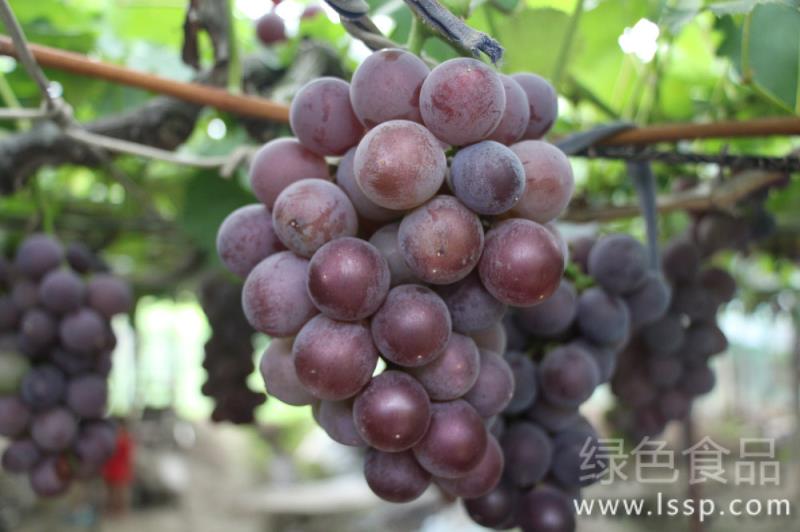
Kyoho grape
Production practice shows that the causes of premature aging of Kyoho grape leaves are as follows: (1) The planting trench (pit) is too shallow (too small), the soil is compacted and poor, and the root system is not well developed. During the rapid swelling and ripening period of the grapes, nutrients and water are insufficient. (2) In the late growth stage of the grapes, there is drought and fertilizer deficiency. (3) The Kyoho grape plant bears too large a load, the grapes consume too many nutrients, and the tree body becomes weak. (4) Downy mildew and white rot on old grape leaves easily cause premature drying and decline. (5) Improper use of ripening agents such as ethephon can cause leaf aging and premature senescence.
Measures to prevent and control premature leaf aging: (1) The planting trench (pit) should be no less than 0.5 m deep and 0.8 m wide to help retain water and fertilizer; when applying base fertilizer, do not leave a partition wall between the planting trench and the fertilizer trench, so as to avoid restricting the extension of the grape root system and the absorption of nutrients. (2) Reasonable load; do not let the grape yield exceed 3000 kg per mu, and leave only one cluster of fruit per fruiting cane. (3) Strengthen fertilizer and water management in the later stage; with sufficient fertilizer and water in the early stage, apply compound fertilizer in early August after the grapes begin to color. For Kyoho grapes marketed in late September, urea should be applied in early September. Water at the same time. This can keep the grapes growing vigorously until before frost. (4) Chemical control of downy mildew and white rot requires attention, especially protecting the vitality and function of the large leaves. (5) In years with high grape yield, use ripening agents such as ethephon with caution, and the leaves must not be exposed to the chemical. (6) Nutrient agents such as Ainong and Yemianbao have a significant effect on protecting and strengthening the function of grape leaves, and can be appropriately applied during the growing season.