Persimmon fruit drop is caused by multiple factors; here is how to prevent and treat persimmon fruit drop
Causes of persimmon fruit drop: first, fruit drop caused by the persimmon's own physiological imbalance; second, fruit drop caused by pests and diseases such as anthracnose and persimmon fruit borer. Fellow fruit growers should take targeted measures according to the causes of persimmon fruit drop.
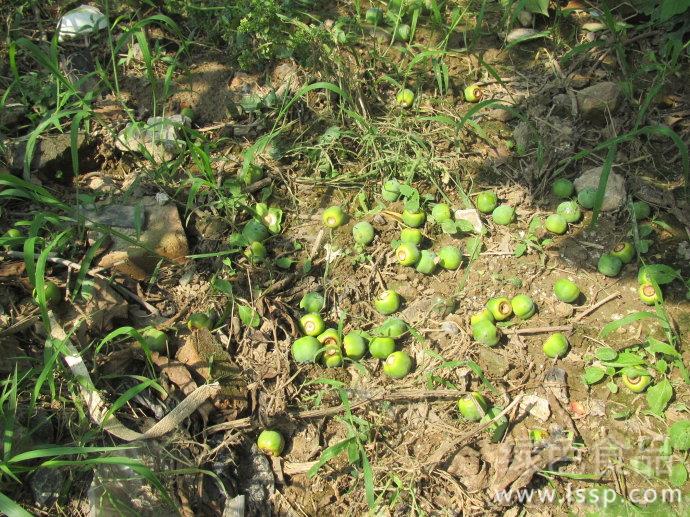
Persimmon fruit drop
Physiological fruit drop
Physiological fruit drop in persimmons mostly occurs from after flowering to mid-July, and is most severe around the wheat harvest, accounting for about 80% of the annual fruit drop; for some cultivars, persimmon fruit drop also occurs in August to September. Causes of physiological fruit drop in persimmons: first, incomplete flower bud differentiation, causing early fruit drop; second, poor pollination - some cultivars, especially most Japanese sweet persimmons, must be provided with pollinizer trees, otherwise the fruit cannot develop and early fruit drop is severe; third, weather reasons - continuous rain during the flowering period affects pollination and easily causes fruit drop; fourth, an unreasonable tree structure and poor ventilation and light penetration, causing weak persimmon tree growth and easy fruit drop; fifth, insufficient fertilizer and water, long-term dry soil, poor soil, and difficulty absorbing fertilizer and water, causing fruit drop; sixth, excessive soil moisture - the persimmon root has poor absorption capacity, so even if more fertilizer is applied, the persimmon tree can hardly absorb and utilize it, and ultimately fruit drop occurs due to insufficient nutrient supply.
Fruit drop caused by pests and diseases
The persimmon fruit borer generally bores into and damages fruit around the wheat harvest. Persimmons damaged by the first generation do not easily fall off and remain hanging on the tree, with larvae parasitizing inside them, pupating, and carrying out second-generation damage. When second-generation damaged persimmons change color from yellow-green to orange-red and from hard to soft, they easily fall off.
Anthracnose occurs in the later growth stage, breaking out heavily in September and causing fruit drop.
Control measures
To prevent persimmon fruit drop: first, provide pollinizer trees (persimmon cultivars that must be provided with pollinizer trees); second, during the flowering period, girdle the trunk or main branches of strong persimmon trees, with a width not exceeding 0.5cm, and after girdling, strengthen the supply of fertilizer and water; third, prune appropriately, strengthen summer pruning, remove useless and superfluous persimmon branches, and promote ventilation and light penetration; fourth, prevent and control pests and diseases, strengthen fertilizer and water management, and enhance tree vigor; fifth, during the flowering period or young fruit stage, spray a 600-fold dilution of brassinolide; sixth, apply topdressing once each in autumn and spring every year.