Key points for applying autumn fertilizer to pear trees: applying sufficient base fertilizer helps achieve a bumper harvest the following year
After the pear harvest is complete, apply sufficient base fertilizer in time to help achieve a bumper pear harvest the following year. Applying base fertilizer to pear trees in autumn promotes their growth and development: first, in September—November, when the pear tree root system enters its second growth peak, fertilizing at this time helps the fertilizer decompose quickly and also enables new roots to absorb and store nutrients. To apply the base fertilizer sufficiently and well for pear trees, several points should be handled well:
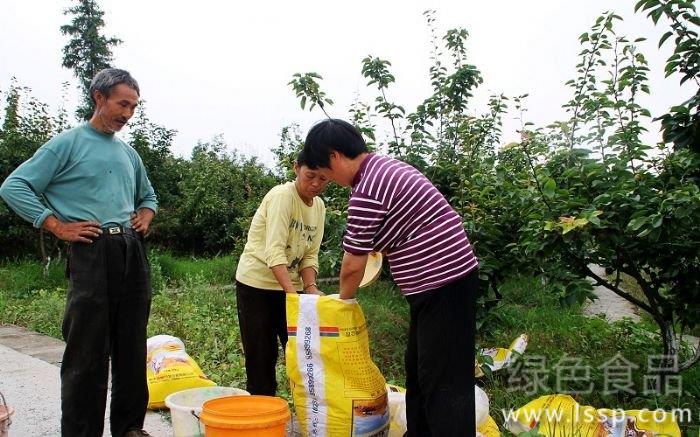
Applying autumn fertilizer to pear trees
1. Best fertilization season. Base fertilizer can be applied from after the pear harvest ends until before the buds sprout in spring the following year, with autumn fertilizer being the best; it is recommended to fertilize in September—October when soil moisture is good.
2. Choose high-quality organic fertilizer. Base fertilizer should be mainly organic fertilizer. Generally, apply about 50 kg of decomposed farmyard manure or barnyard manure per pear tree, together with 1 kg of calcium phosphate fertilizer and 0.2—0.5 kg of urea, or 0.5—2 kg of refined organic compound fertilizer such as Huimanfeng, Diletan, etc. The amount of base fertilizer applied should account for 60%—70% of the annual fertilizer amount.
3. Use flexible fertilization methods. The method of applying base fertilizer should be flexibly determined according to the age of the pear tree and local practices. Newly harvested pear trees can be fertilized by opening a ring trench, or by opening radial trenches along the direction of root growth, or by opening a strip trench between pear tree rows, or by digging holes. These methods should be alternated from year to year. In order to reduce fertilizer waste, the fertilizer should be applied deeply, to a depth of 30—50 cm. In case of drought, irrigate in time so as to regulate fertilizer with water.