Konjac prefers cool shade and needs timely intertillage: management measures for intertillage of konjac
Konjac is a cash crop that likes warmth and tolerates shade, and prefers cool conditions while fearing heat. During its growth, it is necessary to carry out timely intertillage, weeding, topdressing, and pest and disease control:
Konjac
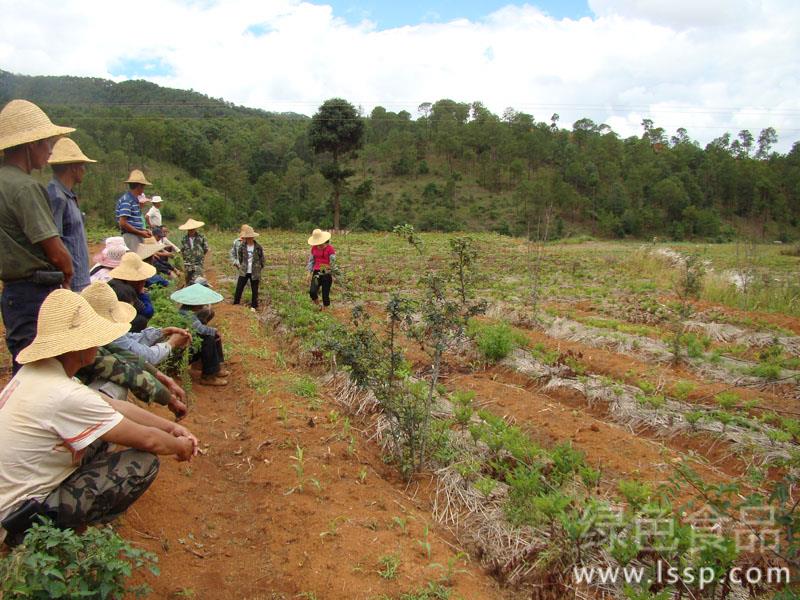
1. Strengthen intertillage management: Konjac intertillage management should be timely, with deep hoeing at the bottom of the ridge, shallow hoeing on the ridge surface, and no hoeing on the ridge top, mainly by manual hoeing. At the same time, moisture should be controlled. Because the konjac root system is not well developed and is not tolerant of drought or waterlogging, irrigation and drainage should be well controlled.
2. Scientific fertilization: mainly organic fertilizer, with increased application of phosphorus and potassium fertilizer. Before planting, apply 2000—3000 kg of organic fertilizer per mu, 30 kg of superphosphate, and 15 kg of potassium sulfate as base fertilizer. Combined with intertillage and earthing up, apply 10 kg of urea and 10 kg of compound fertilizer per mu as topdressing; in mid-to-late August, apply 10 kg of urea, 15 kg of compound fertilizer, and 10 kg of potassium sulfate per mu as topdressing. The fertilization method is to make holes 10 cm away from the plants and apply, or dilute with water and pour.
3. Timely prevention and control of pests and diseases: The main pests and diseases of konjac include soft rot, southern blight, and pests such as sweet potato hornworm and white grubs. Soft rot and southern blight often occur more severely from July to August. Once they occur, they should be controlled promptly. For soft rot, at the early stage of the disease, use 100 ml of thiodiazole-copper plus 28 g of agricultural streptomycin at 20 million units per mu, dilute with 60 kg of water and spray, with an interval of 7 days between sprays, spraying 2——3 times continuously, spraying the ground around the leaf stalks or drenching the roots, which can effectively kill the pathogens on konjac plants; if southern blight is found, promptly remove and burn the diseased konjac, and scatter a small amount of quicklime in the planting hole where the plant was removed to control its spread, then use 100 g of 50% carbendazim or 50 ml of paclobutrazol, zineb, and other agents per mu for spraying, which has a good control effect; for pests such as sweet potato hornworm and white grubs, when few, manual capture is mainly used, and when many, poison silk mite and high-efficiency pyrethroid are used for spraying and killing.