Tomato blotchy ripening affects the fruit's appearance and quality; how can it be prevented and controlled?
Tomato "blotchy ripening" disease affects appearance, quality, yield and profitability. The causes of tomato "blotchy ripening" disease and the prevention methods are as follows.
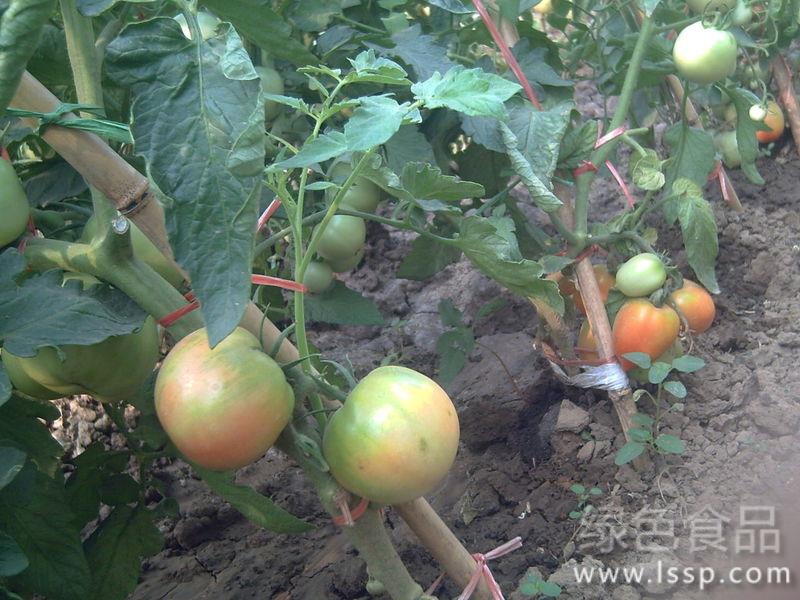
Tomato blotchy ripening
1. Choose varieties.Tomato "blotchy ripening" is related to the tomato variety. Different tomato varieties have different resistance, so when cultivating, try to choose tomato varieties with a low "blotchy ripening" rate.
2. Rational fertilization.High nitrogen, insufficient phosphorus and potassium, and boron deficiency can easily cause blotchy ripening. First, excessive vegetative growth increases chlorophyll, inhibiting lycopene formation, leading to large numbers of yellow patches on the tomato fruit surface. Second, boron and potassium deficiency causes poor nutrient transport, and the tomato turns brown and necrotic due to lack of nutrients. Third, in the middle and late stages of tomato growth, the plant shows premature senescence, which easily causes tomatoes that have not yet ripened to have insufficient nutrient supply during the reddening process, so less lycopene forms and large yellow patches and green stripe patches appear. It is recommended that vegetable growers apply base fertilizer mainly composed of organic fertilizer, with a reasonable mix of various nutrient elements.
3. Temperature regulation.Data show that when the tomato fruit surface temperature exceeds 32°C, it is unfavorable for lycopene synthesis in the tomato, causing the tomato skin to retain green or brown. When it is below 8°C, the formation of lycopene is also disturbed and damaged, and even if a suitable temperature is given afterward, it will not turn red. In addition, if the night temperature is too high, respiration intensity is high, which is unfavorable for accumulating nutrients and appears as poor tomato development. Therefore, during the tomato development period, the temperature needs to be suitable, with the daytime temperature controlled at 25°C-30°C and the night temperature at 13°C-17°C.
4. Light and moisture.Light and moisture affect the tomato's photosynthesis and transpiration. Too strong or too weak light will affect tomato coloring. When the soil is dry and the plant's transpiration is large, the root system supplies insufficient nutrients and water, and tomato coloring will also be poor. Vegetable growers can improve the ventilation and light transmission of tomato plants by pruning and removing side shoots, but at high temperatures, do not let sunlight shine directly on the tomatoes, and be careful to retain one leaf above the tomato. Watering should be done to the degree of seeing dry and seeing wet, avoiding root waterlogging and root damage.