Soybean pod borer control methods: rational pesticide application for precise prevention and control
For the soybean pod borer, a control strategy combining "prevention, avoidance, and treatment" should be adopted. On the basis of agricultural control and a clear understanding of the pest's occurrence period, occurrence level, and degree of infestation, pesticides should be applied rationally for precise control.
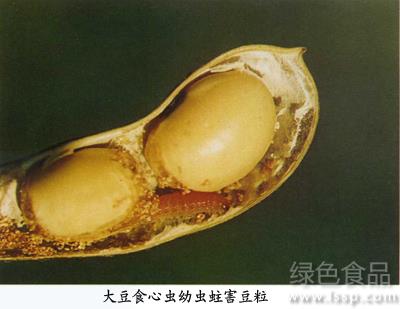
Soybean pod borer
Agricultural control: 1. Use resistant (tolerant) varieties. Soybean varieties that are hairless and have hard pod wall tissue are resistant to the pod borer; 2. Rational crop rotation. Carry out rotation with non-leguminous crops for three years or more to reduce the number of overwintering insects; 3. Plow soybean stubble fields, and plow wheat stubble fields after soybean, to reduce the sources of insects.
Physical and biological control: 1. Use black light traps and frequency-vibration moth-attracting lamps; 2. Mix 1.5 kg of Beauveria bassiana powder with 13.5 kg of fine soil or plant ash, mix evenly, and scatter it on the ridges in the soybean field, so that the larvae that shed from the pods and fall to the ground come into contact with Beauveria bassiana spores and die from infection; 3. During the peak egg-laying period of adults, release 20,000 to 30,000 Trichogramma wasps per mu to destroy the eggs.
Chemical control: 1. Dichlorvos fumigation: at the early peak period of adults, use 100 to 150 ml of 80% dichlorvos emulsifiable concentrate per mu. Cut corn cobs or sunflower stalk pith into small pieces about 5 cm long, soak them thoroughly with dichlorvos, and place one pesticide stick every 4 ridges, advancing 5 meters each time, with the pesticide stick clamped in the branches of the soybean plant; 2. Within 5 to 7 days after the adult peak period, spray pyrethroid insecticides to control adults: use 25 to 30 ml of pesticide per mu diluted with water, and use a knapsack sprayer with the nozzle pointing upward, spraying from the base of the soybean plant upward, so that the undersides of both the lower and upper leaves are covered with the pesticide. Commonly used pesticides: 80% dichlorvos emulsifiable concentrate, 25% Kuishaling emulsifiable concentrate, deltamethrin, fenpropathrin, etc.