Master autumn cabbage cultivation and management techniques for stable yields, good storage quality, and high returns
Autumn cabbage yields more than spring cabbage, and it also gives stable yields, stores well, and has good quality. Growing autumn cabbage can regulate and increase vegetable varieties during the off-season. The cultivation techniques for autumn cabbage are as follows:
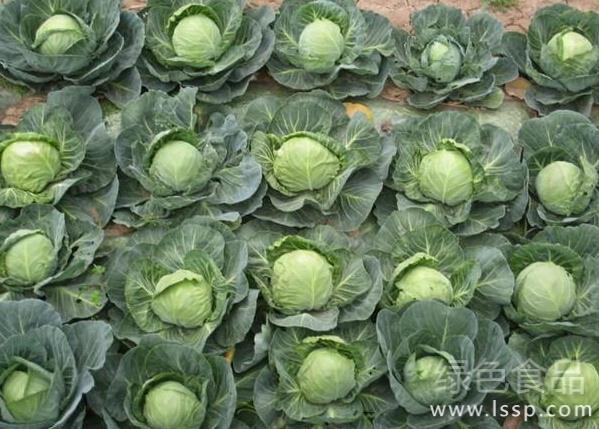
Autumn cabbage
I. Select good varieties:
The early growth stage of autumn cabbage coincides with high temperatures, while the later stage has low temperatures, so heat-tolerant, cold-resistant, storage-tolerant early, mid-season, and late varieties should be selected, with sowing dates staggered.
II. Sow at the right time:
Autumn-sown cabbage has a long growth period, but the autumn growing season is limited. Therefore, the sowing date for autumn cabbage should be determined according to the variety's growth period; it is better to sow appropriately early than to delay.
III. Transplant at the right time:
When autumn cabbage is transplanted, the temperature is high, soil moisture is low, and evaporation is high, so transplanting should be done on a cloudy day or in the evening on a sunny day. The day before transplanting, water the seedbed thoroughly, and when digging up seedlings, avoid damaging too many roots. When transplanting, plant slightly shallow, which helps rooting. Water thoroughly at transplanting, water early to help the seedlings recover, and do a good job of replanting to ensure a full stand. Generally, transplant after about 30 days, when there are 7-8 leaves. Row spacing 50-60 cm, plant spacing 45-50 cm.
IV. Scientific topdressing:
Autumn cabbage needs 5 topdressings. At transplanting, apply 1 topdressing of dilute human excrement and urine; when the rosette leaves form, apply the second topdressing, increase the concentration and amount, and use urea and human excrement and urine; during the vigorous growth period of rosette leaves, apply the third topdressing, open furrows between rows and bury the fertilizer, mixing organic fertilizer with chemical fertilizer (nitrogen fertilizer and phosphorus fertilizer), apply it and then cover with soil and irrigate, then broadcast potassium fertilizer on the soil surface. Apply one topdressing of NPK compound fertilizer each in the early and middle stages of head formation, about 30 kg per mu each time; in the late stage of head formation, stop topdressing.
V. Watering and drainage:
In the early growth stage of cabbage, loosen the soil for aeration, prevent drought, prevent weeds, and drain to prevent waterlogging. In the middle and late stages, push both fertilizer and water, water promptly during drought, and keep the soil alternating between dry and moist. After entering the rosette stage, keep the soil moist; it is best to water with well water, not river or pond water. After heavy rain, do a good job of drainage, and there must be no standing water. Half a month before harvest, control water and fertilizer to facilitate harvest and storage.
VI. Disease and pest control:
After cabbage is transplanted, diseases and pests need to be controlled. For black rot, spray with 50% Shujuncheng 800-fold solution, 72% agricultural streptomycin 3500-fold solution, or 77% Keshade 500-fold solution. For viral disease, spray with 20% Virus A wettable powder 500-fold solution or 1.5% Zhibingling 1000-fold solution. The main pests harming cabbage are mainly cabbage caterpillars, diamondback moths, and armyworms, which can be controlled by spraying with 5% Yitaibao emulsifiable concentrate 1500-fold solution.