Peanut pod rot is caused by root rot or pod rot; how can it be prevented and controlled?
Peanut pod rot is divided into disease-induced pod rot and physiological pod rot. In recent years it has occurred in many plots, with a worsening trend, affecting peanut yield and quality.
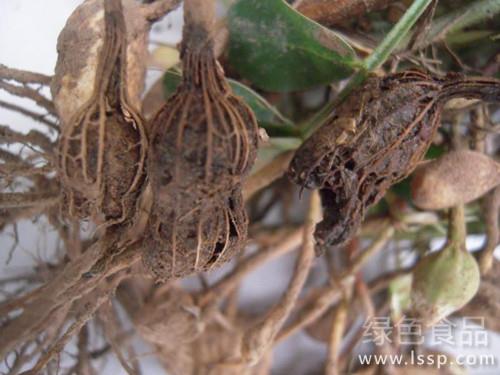
Peanut pod rot
1. Disease-induced pod rot: caused by peanut root rot or pod rot. It occurs to varying degrees every year. In pod rot caused by peanut root rot, the aboveground part (the peanut plant) is clearly wilted, with leaves turning yellow and drying up; while in pod rot caused by pod rot disease, the aboveground plant part shows no symptoms, which often leads farmers to neglect prevention and control, only discovering it at peanut harvest, affecting peanut yield and quality.
(1) Disease symptoms: After peanut pods form, small light brown lesions first appear on the pods; this is the main characteristic of pod rot. The lesions enlarge and merge into one, the entire pod surface loses color, and as the disease progresses the shell turns black, the tissue separates and becomes mushy, rot occurs, the seed coat turns yellow with a slightly rusty color, and the kernels no longer swell. Pulling up a diseased plant reveals blackened, rotten pods.
(2) Conditions for disease development: This disease is caused by fungi, and its occurrence is mainly due to fungus-carrying soil. In years with abundant rain during the pod-setting period the disease is more severe; it is more severe in clay soil and in continuous cropping land.
(3) Prevention and control methods:
1. Soil treatment: Before wheat sowing, use 50% carbendazim or 70% thiophanate-methyl, 5-6 jin per mu mixed with 30-50 kg of fine soil and broadcast. Or use lime at 30-40 jin per mu and broadcast before plowing. This has a very good preventive and control effect on peanut pod rot, root rot and stem rot the following year.
2. Seed dressing with fungicides:
(1) Carbendazim: Moisten the seeds with a spray, use 0.5 kg of 50% carbendazim wettable powder plus 5 kg of dry fine soil to dress 50 kg of seed. Never pile the seed to sweat; sow immediately after dressing, to prevent and control root rot, stem rot and pod rot. Or mix the agent at 0.5%-1% of the seed amount with water to make a medicinal solution for soaking the seeds, with enough to submerge the seeds; soak for 24 hours, remove and sow.
(2) Diweidan: For 7.5 kg of peanut seed, use 20 ml of Diweidan emulsifiable concentrate mixed with 100 ml of water, to prevent and control root rot, stem rot and pod rot.
3. Apply more calcium fertilizer and phosphorus fertilizer.
Pod rot
4. Root drenching: Use 50% carbendazim powder at 400-800 times dilution, 80% mancozeb wettable powder at 200 times dilution, 36% trichloroisocyanuric acid wettable powder at 1000-1500 times dilution, or 40% triadimefon at 800 times dilution to drench the roots or spray at the peanut seedling stage and pegging stage (or pod-setting stage), at an interval of 5-7 days, with 2-3 consecutive applications, which can reduce the occurrence of peanut root rot, stem rot and pod rot.
2. Physiological pod rot: caused by physiological disorders: mainly including drought-induced pod rot and excessive-rain pod rot. After peanuts enter the pod-setting stage, pod rot is caused by the influence of drought or rainy weather. For pod rot caused by drought, sandy soil is more severely affected, and within the same plot, higher ground is more severely affected; for pod rot caused by excessive rain, clay soil is more severely affected, and within the same plot, low-lying areas are more severely affected.
Prevention methods: To prevent and control physiological peanut pod rot, the main thing is to carry out reasonable irrigation and drainage; in particular, sandy land should be watered promptly when drought occurs during the pod-setting stage; heavier clay soil should be drained promptly after watering or rain, and the soil should be cultivated and loosened to reduce moisture.