Lotus root Alternaria leaf spot causes diseased areas to turn brown and dry up, and leaf stalks break easily. How can it be prevented and controlled?
Recently, rainy weather has persisted and air humidity has been high, so lotus root growers have mostly seen Alternaria leaf spot disease. This disease is a major disease of lotus root, mildly affecting lotus root production, and in severe cases the incidence rate can reach more than 80%, affecting lotus root growth and leading to reduced yield.
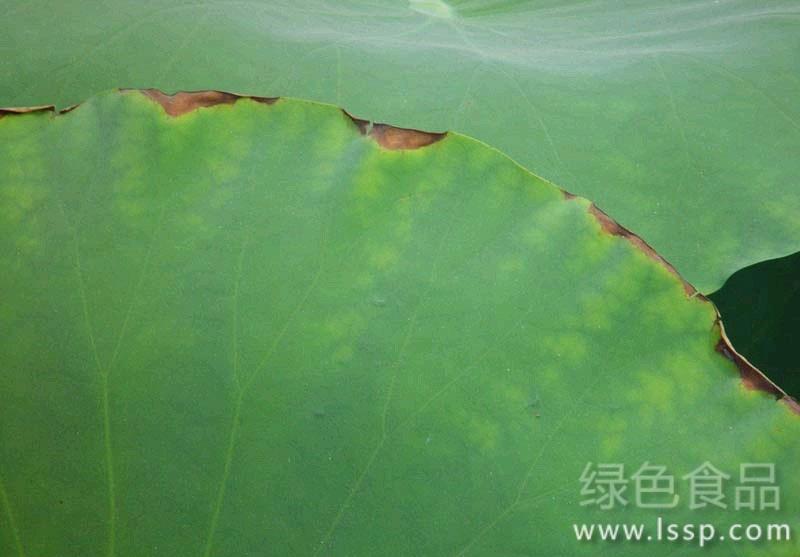
Lotus root brown spot disease
Symptoms: It mainly damages the standing leaves of lotus root, and both leaves and leaf stalks are affected. When leaves become diseased, small greenish-brown spots first appear on the leaves, then expand into dark brown irregular or polygonal lesions, surrounded by a yellow-brown halo, 2-8 mm in size. Concentric rings form on the lesions, and later the lesions often merge into patches, causing the diseased areas to turn brown and dry up; when leaf stalks become diseased, they break easily and droop.
Cause: During the lotus root growing period, when the temperature is 20-30°C, and during rainy days with high humidity, this disease is prone to occur. The pathogen overwinters in diseased remains such as dead leaves and leaf stalks, and in May-June of the following year, when conditions are suitable, it produces conidia that invade through natural openings, wounds and other parts of the plant to cause primary infection; after disease onset, conidia are produced for secondary infection.
Prevention and control methods: During the middle and late stages of lotus root growth, remove and destroy diseased leaves at any time, but be careful not to break the leaf stalks, so that rainwater or pond water does not enter the air passages of the leaf stalks and cause rot of the underground stems. Before harvesting lotus root, pick diseased leaves and take them out of the lotus field for centralized deep burial or burning, to reduce the primary infection source for the next year; where conditions permit, it is best to practice crop rotation for more than 2 years; in disease-free fields, select 2-3 front-section plump true lotus roots as seed lotus roots, because they are rich in nutrients, and their leaves can extend above the water surface as soon as possible, enhancing disease resistance; sow at the appropriate time, plant at a reasonable density, improve ventilation and light conditions, apply sufficient decomposed organic fertilizer, increase potassium fertilizer, and after sowing it is advisable to irrigate shallowly, which helps raise the temperature and enables lotus root to sprout earlier.