Lettuce virus disease causes stunted diseased plants with necrotic spots; detailed control methods
Lettuce virus disease can occur at both the seedling stage and the mature plant stage of lettuce. The main symptoms are mosaic, deformity, yellowing, stunting, and necrosis. Diseased plants are stunted. In the early stage of the disease, lettuce leaves show pale green or yellowish-white irregular mottling, the leaf margins are uneven, and notches appear. Later, yellow-green mottling or inconspicuous brown necrotic spots and mosaic gradually appear. The yield and quality of lettuce are severely reduced.
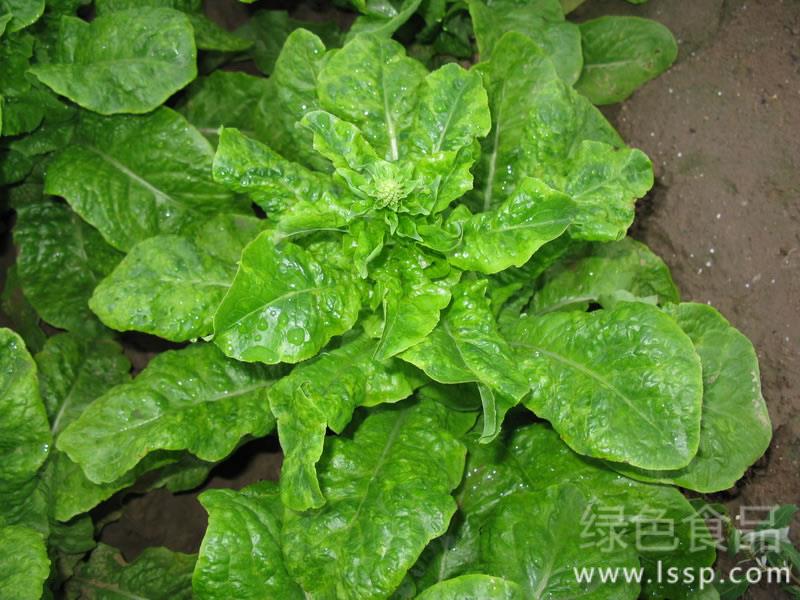
Lettuce virus disease
Control measures:
1. Practice rational crop rotation, select lettuce varieties with strong disease resistance, promptly remove weeds in the field, at the field edges, and around the field borders, and spray the soil surface with a disinfectant plus Xin Gao Zhi Mo (New High-Fat Film) for disinfection treatment. Establish disease-free seed production fields. Before sowing, apply sufficient base fertilizer and water thoroughly.
2. Strengthen field management. During the lettuce growing period, cultivate and weed in time, water moderately, topdress rationally, and increase the application of phosphorus and potassium fertilizers to improve the disease resistance of lettuce. At the rosette stage and when the stem begins to expand, topdress each time with quick-acting nitrogen fertilizer and a trace amount of potassium fertilizer, and apply Zhuang Jing Ling (Stem Strengthening Agent) in combination to make the lettuce stems thick and strong, the plants lush, with a rich natural taste, and to enhance resistance to disasters. Use synergized pesticides and fertilizers to reduce residual toxicity.
3. Chemical control: in the early stage of lettuce virus disease, according to plant protection requirements, spray targeted agents such as 20% Virus A wettable powder (or 1000-fold potassium permanganate solution, 5% Jun Du Qing aqueous solution), and at the same time apply Xin Gao Zhi Mo (New High-Fat Film) in combination to enhance the efficacy, improve the utilization rate of the active ingredients of the pesticide, and consolidate the control effect.