The correct method for using ethephon to ripen cotton
How do you use ethephon to ripen cotton? Please give an introduction. Correct use of ethephon to promote ripening of cotton bolls can make the bolls open 7-10 days earlier, increase yield by 6.4%-10.2%, and increase income by 26-40 yuan per mu. However, the following points should be noted when using it: 1. Efficacy. Ethephon on the market mainly comes in aqueous and oil...
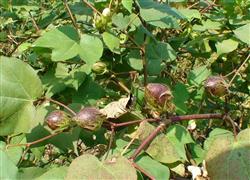
How do you use ethephon to ripen cotton? Please give an introduction.
Correct use of ethephon to promote ripening of cotton bolls can make the bolls open 7-10 days earlier, increase yield by 6.4%-10.2%, and increase income by 26-40 yuan per mu. However, the following points should be noted when using it:
1. Efficacy. Ethephon on the market mainly comes in two forms, aqueous and oil-based. Whichever type it is, check before use whether it has lost effectiveness. Pour a small amount of the original chemical onto cement ground; if it foams a lot, it is proven effective. If the liquid produces sediment, heat and shake it with warm water at 70-80°C, and use it after the sediment dissolves; this does not affect efficacy.
2. Chemical properties. Ethephon is acidic and will quickly decompose and lose effectiveness when it encounters alkaline substances. Therefore, ethephon must never be mixed with alkaline pesticides, nor should it be diluted with strongly alkaline water such as pond water. Ethephon can release ethylene gas at a pH above 3.8. After dilution with water, the pH value will change, so it should be mixed and used immediately, otherwise efficacy will be affected.
3. Field selection. Choose cotton fields that are excessively vegetative, late-maturing, strongly regenerative, intercropped or relay-cropped, and summer-sown cotton fields. It should not be used on cotton fields with normal growth and development or with a tendency toward premature senescence, otherwise the cotton will wither too early and yield will be reduced. For fields used for breeding improved varieties, it is generally not used, otherwise the germination rate of cotton seed will be reduced.
4. Application time. Ethephon can only decompose and release ethylene in an environment above 20°C, and dry, high-temperature weather helps improve efficacy. Therefore, generally apply it 20 days before frost, when 80% of cotton has had bolls hanging for 40-45 days and the daily maximum temperature is above 20°C. If rain occurs within 12 hours after spraying, spray once more. In the Huang-Huai-Hai cotton region, spraying around October 5 is optimal.
5. Application concentration. For general cotton fields, use 100-150 grams of original liquid per mu, add about 60 kg of water, and prepare a 0.15%-0.25% spray solution. For cotton fields with severe excessive vegetative growth or where the field must be cleared quickly, the concentration can be increased, but generally not above 0.3%.
6. Spraying method. For cotton fields that are excessively vegetative and late-maturing, or where cotton is pulled up to plant wheat, spraying only once has too great an impact on the upper young bolls, so it can be sprayed in 2 applications. That is, spray the middle and lower bolls of the cotton plant in mid-to-late September, and when the lower bolls open in early October, spray the top bolls once more. Because ethephon is absorbed and transported very slowly, it should be sprayed onto the bolls as much as possible. Note that before spraying, first pick the bolls that have already opened, so that the liquid does not contaminate them and reduce cotton quality.
Click for moreCotton cultivation techniques
Clickfor more regulator use techniques
Click for more pesticide use techniques