How to prevent physiological disorders in greenhouse eggplants during the low-temperature and low-light period?
【Summary】: For eggplants grown in greenhouses, the early fruiting stage coincides with the low-temperature and low-light period (early December to mid-February of the following year), when various physiological disorders tend to occur. Their causes and corresponding preventive measures are as follows:
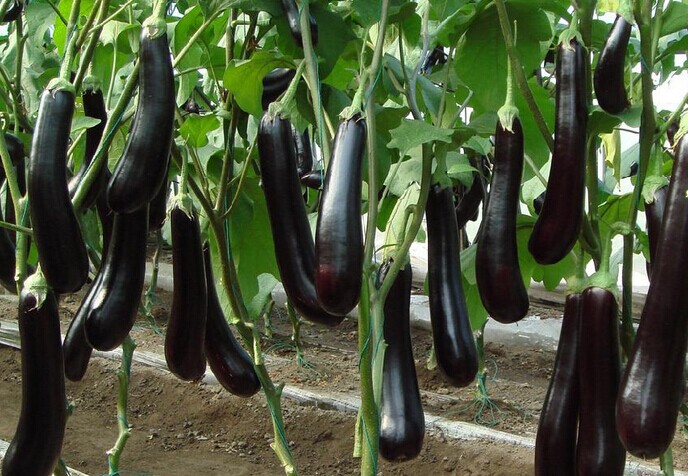
Tender leaves turn yellow, young leaves appear bright yellow-white with green remaining at the leaf tips, and rust-colored streaks appear on the middle and lower leaves; excessive fertilizer, high humidity, acidic soil, or excess manganese nutrition inhibiting iron uptake can easily cause yellowing of new leaves.
* Preventive measures:After the onset of symptoms, spray ferrous sulfate at 500 times dilution on the leaf surface (do not spray too heavily); apply magnesium hydroxide and lime to the field to adjust soil pH; supplement potassium to balance nutrition and satisfy or promote iron supply.
Flower buds do not open, the ovary does not enlarge, and flower buds remain closed, affecting pollination and fertilization. In cold seasons, when the field lacks water, the air is humid, and soil pH is above 7.5, the availability of boron in the soil decreases; excessive lime calcium in the field induces boron deficiency in the plants, both of which can cause flower buds to remain unopened for a long period.
* Preventive measures:Spray borax at 700 times dilution or amino acid polypeptide pollination agent on the leaf surface.
Fruits become rigid and split, the fruit is hard and does not enlarge, spongy tissue is dense, the skin color lacks luster, and there are pale white stripes; after watering, the fruit cracks, does not grow large, and is of poor quality. After the eggplant skin becomes suberized, watering on a sunny day will cause fruit cracking. During the low-temperature and low-light period, which coincides with fruit enlargement, the absorption of nitrogen, potassium, and boron increases, while the relative demand for phosphorus is lower; if the phosphorus input is too large, it affects the absorption of potassium and boron, making the fruit have many seeds and little flesh and become rigid.
* Preventive measures:Phosphorus fertilizer is mainly applied under the seedling roots at transplanting time, and later 2-3 kg of pure phosphorus per mu is applied each time; during the fruiting stage, potassium fertilizer is mainly applied.
Leaf drop and fruit drop: during the low-temperature period, the lower leaves turn yellow and fall off. If the temperature is too low or nitrogen and phosphorus fertilizers are applied excessively, the plants will age due to zinc deficiency, which reduces gibberellin synthesis. The junctions between the petiole and stem, and between the fruit stalk and fruit, form abscission layers due to lack of auxin and then drop.
* Preventive measures:For aged plants, spray zinc sulfate at 700 times dilution on the leaf surface, or apply 1 kg of zinc sulfate per mu; you can also spray nutrient elements rich in zinc, such as Lülang, on the leaf surface to prevent drop and promote growth.