Control Methods for Kiwifruit Armored Scale Insects That Weaken Tree Vigor and Cause Branch Dieback
The main armored scale insects harming kiwifruit include the globular mealybug (Drosicha corpulenta), the persimmon long-tailed mealybug (Pseudococcus longispinus), and the white peach scale (Pseudaulacaspis pentagona). Armored scale insects have a hard shell or white powdery covering for protection, making them difficult to control. It is essential to target their vulnerable stages to achieve twice the result with half the effort.
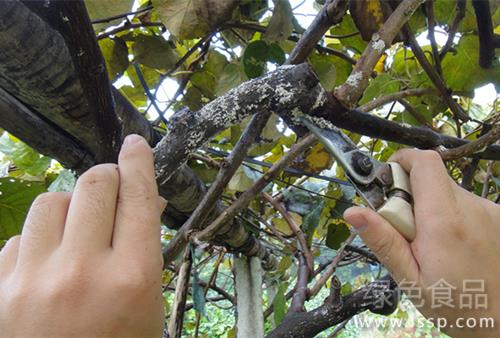
Kiwifruit Armored Scale Insect Control
I. Damage Characteristics:Armored scale insects have several generations per year. Female adults and nymphs damage the tree by attaching to the trunk, canes, and leaves, piercing and sucking the sap from canes and leaves. The narrow-mouthed wax scale (Pseudaonidia paeoniae) can also damage kiwifruit. They have poor mobility and tend to cluster in concentrated areas, making them easier to eliminate completely. Scale insect eggs, larvae, and female adults overwinter on branches, canes, trunks, and in the soil. For example, the globular mealybug: in May, females descend from the tree and overwinter in soil crevices or under stones 5-7 cm deep around the trunk, secreting white cottony egg sacs and laying eggs inside them, where they pass the summer and winter. The white peach scale and similar species overwinter as fertilized females on canes. The narrow-mouthed wax scale overwinters as second-instar nymphs and a few adults on dead canes and leaves. Female adults and nymphs have a waxy scale covering that makes it difficult for pesticide solutions to penetrate, so contact insecticides are less effective while systemic pesticides work better. In severe infestations, the cane surface forms an uneven, clam-shell-like layer that weakens tree vigor and leads to cane or whole-tree death.
II. Control Methods:
1. Strengthen quarantine. In Europe and North America, the narrow-mouthed wax scale is a quarantine pest for exported fruit. In China, scale insects are listed as quarantine pests for the transport of nursery stock and fruit.
2. In winter, use a hard plastic brush or fine steel wire brush to scrub off the insects from kiwifruit branches and canes. During pruning, cut off canes where insects cluster. Before bud break, scrape off the old bark at the base of the trunk and apply insect adhesive tape about 10 cm wide.
3. Control during the crawling period of newly hatched larvae by spraying 1000x diluted Lorsban (chlorpyrifos). Note that scale insects hatch at different times; to achieve effective control, it is best to spray again after 5-7 days.
4. Before kiwifruit trees bud, spray with scale mite spirit or environmentally friendly light emulsifiable oil, which forms an air barrier on the insect's surface, causing suffocation and death.