Spring cabbage bolting causes major economic losses, how can it be prevented?
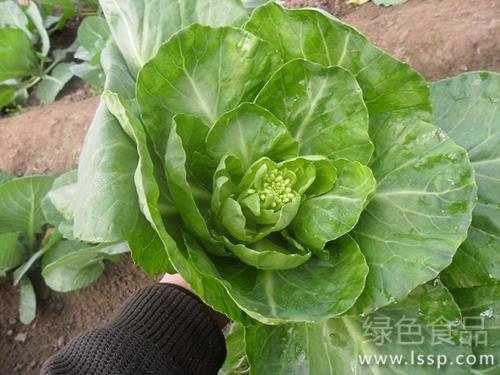
Cabbage bolting
I. Choose cabbage varieties with strong winter hardiness
Choose varieties with strong winter hardiness that are not prone to premature bolting, such as Chunfeng cabbage, Zhengchun cabbage, and Aichun cabbage; weak winter-hardy cabbage varieties will still be difficult to protect from premature bolting even if sown late and overwintered as small seedlings. Therefore, to prevent early bolting in spring cabbage, the first step is to choose the right spring cabbage variety.
II. Sow at the right time
Sowing at the right time is the key to achieving high yields in cabbage. There is a threshold for the sowing period of spring cabbage; sowing within this threshold makes premature bolting unlikely. When growing spring cabbage, there is a habit of sowing early. If sowing is advanced, no matter how strong the winter hardiness of the cabbage, premature bolting is hard to avoid. For the same spring cabbage variety, different seedling-raising methods lead to different bolting situations. For example, when sown at the same time under two seedling-raising methods, greenhouse and cold frame, the calendar seedling age is the same, but the physiological seedling age differs. Because the greenhouse temperature is higher, greenhouse seedlings grow faster and the seedlings are larger, so the chance of passing through the vernalization stage is greater and the bolting rate is higher. Therefore, different sowing dates should be adopted according to different seedling-raising methods, controlling temperature and controlling seedling age to prevent premature bolting.
III. Plant out at the appropriate age
If planted out too early, cabbage seedlings are exposed to low temperatures for a long time and recover slowly from transplanting. Especially after planting out, if a late spring cold spell occurs, the bolting rate will increase greatly. Therefore, spring cabbage should be planted out late. When planting out, first select and pull out large bolted seedlings, and choose strong seedlings. The standard for strong seedlings is: seedlings with 6 ~ 8 leaves, short hypocotyl and internodes, thick stems, thick leaves, dark green color, well-developed root system, strong resistance, dense top leaves, relatively long internodes, and a flat top.
IV. Combine promotion and control
Because seedling age is closely related to bolting, management should be strengthened, especially the control of temperature, light, fertilization, and watering. For fertilization and watering, control in winter and promote in spring. In winter, do not promote excessive vegetative growth; according to seedling condition and weather conditions, practice seedling hardening to prevent excessive seedling growth and cultivate strong seedlings. After the low temperatures the following year, when temperatures begin to rise, cabbage growth gradually speeds up. During this period, strengthen fertilizer and water management to promote cabbage vegetative growth, so that vegetative growth exceeds reproductive growth, avoid premature bolting, and strive for early market availability, high yield, and good returns for spring cabbage.