Clubroot of rapeseed causes root swelling, rotting, and wilting. How can it be prevented and controlled?
Rapeseed clubroot produces spindle-shaped or irregularly deformed "tumors" on the roots, mostly on the main root and less on the lateral roots. In the early stage, the surface of the "tumors" is smooth and white, then gradually turns brown, with a rough surface and cracking. These cracked "tumors" are easily infected by pathogens, causing rot and a foul odor.
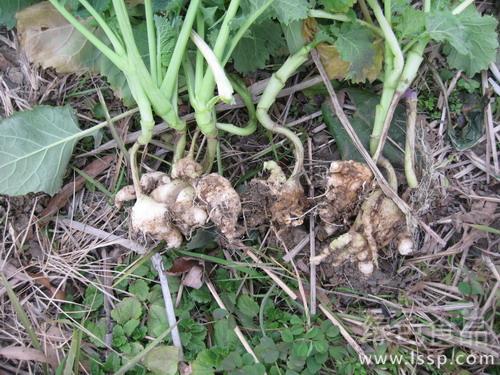
Rapeseed clubroot
I. Symptoms:In the early stage of the disease, at noon, because the temperature is high, rapeseed transpiration is intense and water loss is rapid, but since the roots are damaged by the "tumors," their ability to absorb water and nutrients is poor. At this time, if there is a shortage of water, the aboveground part of the diseased plant tends to wilt; in the morning and evening, rapeseed transpiration is low and water loss is small, so it does not wilt. However, as the disease worsens, infected rapeseed will wilt completely and even die.
II. Prevention and control methods:
1. Prevention. Start with cultivation management, eliminate or reduce the number of pathogens in rapeseed fields from the source, and create an environment favorable for rapeseed growth but unfavorable for pathogen growth.
Methods: Do not transfer rapeseed seeds from diseased areas; implement crop rotation with other non-cruciferous crops, preferably rice, and severely diseased fields need 4-5 years of rotation; the drainage facilities in rapeseed fields need to be improved, with deep furrows and narrow beds, clearing ditches to prevent waterlogging, and reducing soil moisture; never plant rapeseed in low-lying waterlogged land or acidic soil; fly ash compound fertilizer can be used to improve the soil; choose fields without clubroot for raising seedlings to prevent the spread of pathogens; after the rapeseed harvest, diseased rapeseed residues should be burned or composted. Note: compost must be thoroughly decomposed before use. Taking the above measures can reduce the chance of disease occurrence, but does not guarantee that no disease will occur.
2. Treatment. When a small number of rapeseed plants with clubroot appear in the field, they need to be pulled out promptly, and quicklime should be scattered in the diseased holes for disinfection. If there are many diseased plants, 50% carbendazim wettable powder at 500 times dilution can be used to drench the roots, 250 milliliters per plant; or 40% quintozene powder at 500 times dilution can be used to drench the roots, 400-500 milliliters per plant, which can also effectively control the disease.