Turning Straw Waste into Treasure: Key Technical Points for Cultivating Oyster Mushrooms on Straw
Every year, October is the harvest season for late rice and other crops in various regions, and the fields are covered with discarded straw. In the past, this straw was simply destroyed, but now, because of haze control, burning straw is prohibited, leaving people unsure how to handle it. In fact, straw can absolutely be turned from waste into treasure. Today we introduce the key technical points for cultivating oyster mushrooms with straw.
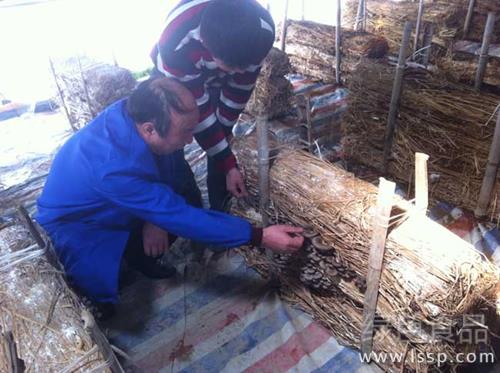
Cultivating oyster mushrooms on straw
1. Suitable mushroom strains: Experiments show that the more ideal strains include low-temperature types such as Pleurotus sapidus, Shanghai oyster mushroom, and Jingzhou No. 1; medium-temperature types such as White Dabai oyster mushroom and Hypsizygus marmoreus; high-temperature types such as Ce 5 and pink oyster mushroom; and wide-temperature types such as White Florida, 901, Shuangjing No. 8, P32, etc.
2. Suitable cultivation season: Along the middle and lower reaches of the Yangtze River, sowing can be done from early October to mid-February of the following year, with mid-October to mid-November being the best period.
3. Straw selection and treatment: Choose fully dry, non-moldy straw with a golden-yellow color, and glutinous rice straw, early rice straw, and straw stored for one year are preferable. Soaking in lime water: Press the straw once with a stone roller to crack the straw tubes, tie it into small bundles, place it in a soaking pool, and put heavy objects on top. Soak in 3% lime water for 2 to 4 days, turning the pool 1 to 2 times so it soaks evenly. The soaking time depends on the air temperature at the time. After soaking, the straw material should have a pH between 8 and 9 and a moisture content of about 60%. The soaked straw can be further piled for fermentation so that the pile temperature reaches above 60°C, during which the pile is turned once.
4. Improve the quality of the mushroom spawn and increase the sowing rate. Experiments show that with wheat-grain spawn, there is no need to add organic supplements such as wheat bran or rice bran to the straw, which can prevent and reduce contamination by weed molds. For the age of the cultivation spawn, wheat-grain spawn is 25 to 30 days, and cottonseed hull spawn is 20 to 25 days. Sowing rate: wheat-grain spawn is 20 to 25%, and cottonseed hull spawn is 25 to 30%.
5. Compacting the material for spawn running. For indoor shelf cultivation, the shelves should be slightly tilted to help drain accumulated water from the material; after sowing, cover with plastic film, place wooden boards on top, and add heavy objects for pressure. For outdoor cultivation, the bed should not be deep; beds with good drainage should be about 15 cm deep; where drainage is poor, ground-level beds can be made, with a 15 cm high soil ridge built around the inside of the bed. After sowing, cover with film, spread a layer of straw on the film, and then cover the straw with 5 cm of fine soil.
6. Supplement nutrient solution. Straw has insufficient residual nutrients, so nutrients must be supplemented in the later stage to help achieve high yield. The specific method: after harvesting 1 to 2 flushes of oyster mushrooms, spray a 0.5% urea solution, using 4 to 6 kg per 100 kg of straw material; or spray a mixed solution of 0.2% urea plus 2% sucrose, using 3 to 4 kg per 100 kg of straw material. Spraying nutrient solution can increase yield by 15 to 20%.