Mustard soft rot causes leaves to shrivel and stems and roots to rot and stink. How can it be prevented and controlled?
Mustard soft rot is a bacterial disease. In the early stage of the disease, the leaves wilt and droop, most noticeably at midday on sunny days. In severely affected mustard, the base of the leaf stalks and the pith of the stem and root rot completely, filling with a pale grayish-brown, sticky substance and giving off a foul odor. Eventually the stem base rots into a hollow cavity, and in severe cases the whole plant dies. Control methods include:
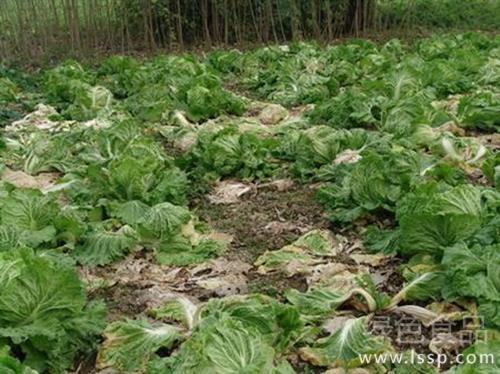
Mustard soft rot
(1) Manage the crop rotation well:Rotate mustard with grass-family crops; do not grow it in succession with cruciferous crops.
(2) Manage cultivation well:First, level the soil well to avoid an uneven bed surface; second, make the furrows deep, reaching 25-30 cm (furrow width 40 cm); third, keep the bed surface high, reaching more than 30 cm.
(3) Manage water well:For water management in mustard, use watering to combat drought, and avoid flooding irrigation and overflowing irrigation that lead to disease.
(4) Manage fertilization well:Use formula fertilization and avoid excessive application of nitrogen fertilizer, which can induce man-made disease.
(5) Manage pest control well:Prevent and control the three major groups of pests, namely soil pests, boring pests and foliar pests, so as to prevent pest damage to plants and reduce the chance of pathogen invasion.
(6) Manage pesticide use well:Applying pesticide at the early stage of mustard disease is best. In addition to pulling out diseased plants and destroying them in a centralized way, a small amount of lime should also be spread around the diseased planting holes for disinfection.