Applying Boron Fertilizer to Prevent Hollow Heart in Radishes: Key Points for Boron Fertilizer Application on Radishes
Radishes have a relatively high boron requirement. Increasing boron fertilizer application can raise yields by about 15% and can prevent hollow heart. The specific application methods for boron fertilizer are as follows:
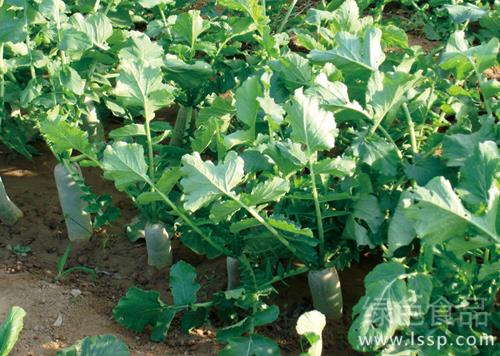
Radish
As a base fertilizer: when sowing radishes, mix 300 grams of boric acid or 500 grams of borax per mu into 5-10 kg of dry fine soil, mix thoroughly, sieve, then apply as a base fertilizer into the sowing furrows or sowing holes. You can also mix the dry fine soil containing boron fertilizer with radish seeds, mix thoroughly, and scatter into the sowing furrows and sowing holes.
Seed dressing: mix 3-5 kg of fine soil with water, and add boron fertilizer at a rate of 300 grams of boric acid or 500 grams of borax per mu, stir into a thin paste, then pour in radish seeds and some dry fine soil, rub with your hands so that the soil containing boron fertilizer adheres to the surface of the radish seeds to form a seed coating. Once the seeds can be separated from one another, they are ready for sowing.
Foliar topdressing: in boron-deficient fields, from the appearance of 2-3 true leaves in radishes until about 15 days before harvest, use 80-100 grams of boric acid or 120-150 grams of borax per mu each time, mixed with 50-60 kg of clean water to make a foliar fertilizer, and spray on sunny evenings, once every 15-20 days.
Whether boron fertilizer is used as a base fertilizer, seed fertilizer or foliar topdressing, the field soil moisture content must be 60-80%; dry soil will affect the radish's absorption of boron. If there are consecutive rainy days or heavy rainstorms, drain water and reduce waterlogging in time; especially at the seedling stage, there must be no water accumulation in the field. Boron fertilizer has residual effects: applied in one season, its effectiveness can last 2-4 years, so it does not need to be applied every year.