Control methods for eggplant black heart disease causing half-plant yellowing and wilting of the whole plant
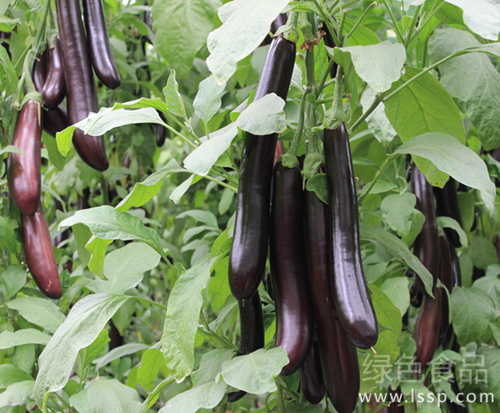
Eggplant
Water and fertilize reasonably to avoid damage to the eggplant root system. During the rainy season, drainage should be carried out in time, especially on cloudy and rainy days when humidity inside the greenhouse is high; try not to water during this period. When watering on sunny days, do it before 10 a.m., and never water at noon or in the afternoon, so as to prevent the eggplant roots from suddenly encountering cold water under relatively high soil temperature and causing root rot. At the same time, try to avoid applying fertilizers with excessively high nitrogen content, because at low temperatures nitrogen often exists in the form of ammonium nitrogen, which antagonizes the absorption of trace elements and causes eggplant to develop black heart due to nutrient deficiency.
Suitable soil temperature can promote the growth and development of the eggplant root system and improve its fertilizer absorption capacity, so eggplant will not develop black heart due to nutrient deficiency. Therefore, during consecutive cloudy days in early spring, the greenhouse film should be wiped often to maintain high light transmittance, so as to raise the temperature inside the greenhouse, promote the rise of soil temperature, and accelerate root growth and development. At the same time, ventilation inside the greenhouse should be strengthened to reduce humidity inside the greenhouse and enhance ventilation and dehumidification.
Fertilize reasonably as a top dressing. When eggplant develops black heart, spray foliar fertilizer containing multiple trace elements such as potassium, calcium, magnesium, iron and zinc according to the actual situation. At the same time, spray a mixed solution of Caiguo Zhuangdiling + Xin Gao Zhi Mo to improve immunity, promote vigorous growth of eggplant, increase the fruit-setting rate, and reduce eggplant black heart disease.