How effective is glyphosate herbicide in actual weed control?
How effective is glyphosate herbicide? Zhongdiwang has compiled the principles and precautions of glyphosate weed control, listed below for netizens' reference. The principle of glyphosate weed control: Glyphosate is a systemic, conductive, slow-acting, broad-spectrum, non-selective herbicide that mainly inhibits enolpyruvylshikimate phosphate synthase in plants...
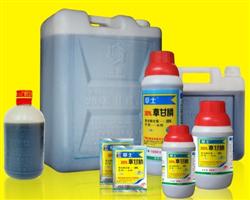 How effective is glyphosate herbicide? Please introduce
Zhongdiwang has compiled the principles and precautions of glyphosate weed control, listed below for netizens' reference.
The principle of glyphosate weed control:
Glyphosate is a systemic, conductive, slow-acting, broad-spectrum, non-selective herbicide that mainly inhibits enolpyruvylshikimate phosphate synthase in plants, thereby inhibiting the conversion of shikimate to phenylalanine, tyrosine and tryptophan, interfering with protein synthesis and causing plant death.
Glyphosate is absorbed through stems and leaves and then conducted to all parts of the plant. It can control plants of more than 40 families, including monocotyledons and dicotyledons, annuals and perennials, herbs and shrubs. After glyphosate enters the soil, it quickly binds with metal ions such as iron and aluminum and loses its activity, with no adverse effects on dormant seeds and soil microorganisms in the soil.
Methods to improve glyphosate efficacy:
Because the glyphosate solution must be conducted in large amounts to the underground rhizome tissues of weeds to achieve a weed-killing effect. This requires the weeds to have relatively more leaves. If applied when the weed area is small and photosynthesis is weak, the nutrients stored in the roots are conducted from bottom to top, and at this time the amount of solution transported downward to the roots is very small, so it cannot achieve a weed-killing effect. In the middle and late stages of weed growth, photosynthesis is strong and photosynthetic products are conducted from top to bottom, so applying the herbicide at this time gives the best effect.
Therefore, the most important thing when using glyphosate is to select the best application period. For example, to control weeds in corn fields with glyphosate, the best time to apply is when the corn seedlings are 1.5 m tall with 2-3 old residual leaves at the lower part and the weeds have reached 10 cm in height.
Within the range of 24-25°C, as the temperature rises, the amount of glyphosate absorbed by weeds doubles, so applying the herbicide at high air temperature gives better results than at low temperature. High relative air humidity can prolong the moist time of the solution on the plant surface, which is beneficial to the conduction of the herbicide. When the soil is dry and has low water content, it is not conducive to plant metabolism, and therefore not conducive to the conduction of the herbicide in weeds, so the efficacy also decreases.
Next, regarding the issue of mixing glyphosate with other herbicides, some farmers want to control multiple kinds of weeds and, in order to save labor, arbitrarily add other herbicides when using glyphosate, but the result is actually poor, because some herbicides cannot be mixed with glyphosate. For example, fast-acting herbicides such as MCPA and paraquat cannot be mixed with glyphosate, lest the aboveground parts of the weeds die too early and lose the systemic conduction function for glyphosate, reducing the killing effect of glyphosate on underground weed rhizomes. However, adding some plant growth regulators and adjuvants (organosilicone) to glyphosate can improve the control effect.
There is also the selection of the best application method. The application method is crucial to glyphosate weed control, because within a certain concentration range, the higher the concentration and the finer the spray droplets from the sprayer, the more favorable it is for weed absorption. At the same concentration, the greater the amount used, the better the weed control effect.
Precautions when using glyphosate herbicide:
Glyphosate is a non-selective herbicide, and improper use can bring safety risks to crops. Some farmers use glyphosate to control weeds on field ridges, and often because of glyphosate drift, it causes phytotoxicity to nearby crops.
There are also farmers who, after use, do not clean the sprayer as required. As a result, when spraying other pesticides, the residual glyphosate agent is sprayed on other crops and causes phytotoxicity. If phytotoxicity occurs on rice, in mild cases the leaves lose green color and cause serious growth inhibition; in severe cases, the plants may die prematurely, fail to head, or produce deformed heads.
Click to get more herbicide application techniques
Click to get more pesticide application techniques