How to use the insecticide chlorpyrifos emulsifiable concentrate
How effective is the insecticide chlorpyrifos emulsifiable concentrate? How is it used? What should be noted? We also ask netizens to help advise. The insecticide chlorpyrifos emulsifiable concentrate has contact, stomach and fumigant action on pests, and is especially very effective for controlling the brown planthopper. Zhongdi Net has compiled its characteristics and use precautions, in order to...
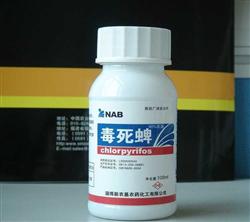 How effective is the insecticide chlorpyrifos emulsifiable concentrate? How is it used? What should be noted? We also ask netizens to help advise
The insecticide chlorpyrifos emulsifiable concentrate has contact, stomach and fumigant action on pests, and is especially very effective for controlling the brown planthopper. Zhongdi Net has compiled its characteristics and use precautions, listed below for netizens' reference.
Characteristics of chlorpyrifos emulsifiable concentrate:
1. Chlorpyrifos generally comes in formulations such as emulsifiable concentrate, granules and microemulsion. Among them, 40.7% emulsifiable concentrate (Tongyishun, Lesiben) has the highest content; most are 40% emulsifiable concentrate (Xinnongbao, chlorpyrifos, Bole), and emulsifiable concentrate is the most used and gives good results; 5% granules are mainly used to control soil insects in vegetables and cucurbits, and are an excellent variety to replace the highly toxic pesticide 3% carbofuran granules; 30% microemulsion is being gradually promoted.
2. Chlorpyrifos is a moderately toxic pesticide, is highly toxic to fish and aquatic organisms, and is toxic to bees. Its residue period on leaves is generally 5-7 days, and its residue period in soil is longer. It causes no phytotoxicity to most crops, but tobacco and tomato are relatively sensitive to foliar spraying, so it must beused with caution。
3. For the peak hatching period of the 5th-generation brown planthopper eggs in rice, you may choose 25% buprofezin (Pusiling) plus 40% or 40.7% chlorpyrifos emulsifiable concentrate (Tongyishun, Xinnongbao, Bole, Lesiben) at 80-100 ml/mu, or 5% fipronil at 30-40 ml/mu plus 40% or 40.7% chlorpyrifos emulsifiable concentrate at 80-100 ml/mu for spraying.
When applying the pesticide, the field should maintain a 2-3 cm water layer. For rice fields with high plant density where the spray liquid is difficult to reach the base of the rice plants, use a stretcher-mounted sprayer for high-volume spraying; for rice leaf roller and rice thrips, use 40.7% chlorpyrifos emulsifiable concentrate at 80-120 ml per mu with a mist sprayer for fine spraying; for diamondback moth, cabbage caterpillar and soybean pests, use 40.7% chlorpyrifos emulsifiable concentrate at 80-150 ml per mu for fine spraying; for pests such as citrus leafminer, red spider mite and tea geometrid, dilute 40.7% chlorpyrifos emulsifiable concentrate to a concentration of 1000-2000 times.
Precautions when using chlorpyrifos emulsifiable concentrate:
1. When currently controlling the brown planthopper, to improve the control effect, chlorpyrifos can be mixed and used immediately with buprofezin (Pusiling) and fipronil, improving the contact, stomach and fumigant action on the brown planthopper pest.
2. When applying the pesticide in the later stage of rice, pay even more attention to having a sufficient spray volume. Under the recommended dosage per mu, the amount of pesticide used should increase or decrease with the spray liquid. In the later stage of rice, the upper limit of the recommended dosage should be used, with a manual sprayer applying more than 50 liters of spray liquid per mu, and a stretcher-mounted motorized sprayer applying more than 300 liters of spray liquid per mu.
3. Follow the safe use regulations for pesticides and take good personal protection.
4. In areas where grain and mulberry are interplanted, use the pesticide cautiously and stay away from silkworm-rearing areas, to avoid polluting mulberry leaves and poisoning silkworms through pesticide use in rice fields.
Click to get morePesticide application techniques
Click to get morePesticide application techniques