There are many causes of inferior spears in white asparagus. How do you treat each cause accordingly?
White asparagus that is discolored, hollow, cracked, deformed, rust-spotted, curved, aging or bitter is all called inferior asparagus. The common causes of inferior spears include variety, spear age, temperature, soil, and water and fertilizer management. So how do you treat inferior white asparagus according to the cause?
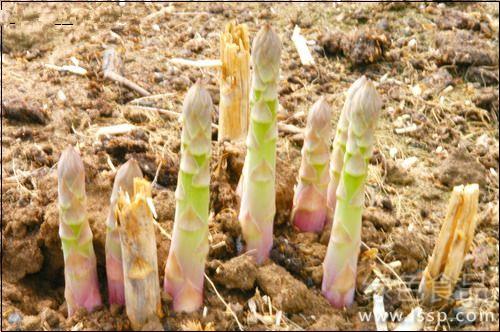
Inferior white asparagus
I. Discolored spears
White asparagus spears are entirely white, but some asparagus tips turn purple. Discoloration of the spears is mainly caused by temperature and light. The spears change color after exposure to sunlight, and some spears that have not yet emerged from the ground also change color when they encounter high temperatures and drought. To prevent discoloration, in addition to selecting superior varieties, when building the ridges, break up the ridge soil finely and firm it to prevent light from leaking through the soil. When harvesting spears, avoid letting the tips emerge from the ground. In drought and high temperatures, water in good time to lower the soil temperature and keep the soil moist.
II. Hollow spears
Hollow spears readily occur on relatively thick and large spears, and are divided into three types: small hollow, medium hollow and large hollow. Causes: (1) Low temperature. (2) Excessive fertilization. During the spear harvest period, excessive use of nitrogen fertilizer causes the cell tissues of the asparagus spears to expand too early and too quickly, so the central tissue cannot keep up with the growth of the surrounding tissue and becomes hollow. (3) Older spear age. The older the spear age, the higher the hollow rate. (4) Soil water content. At relatively high temperatures, if the soil has little water, hollow spears increase markedly. (5) Variety differences. Therefore, to reduce hollow spears, select varieties with high yield, good quality and resistance to hollowing; during the spear harvest period, film covering can be used to raise the temperature for harvesting spears; apply heavy organic fertilizer; and as far as possible do not apply too much nitrogen fertilizer as a top dressing.
III. Cracked spears
Cracked spears are caused by uneven supply of soil moisture during spear growth, or by sudden rain or watering during a spear harvest period that has long been dry and lacking water. In addition, a lack of phosphorus and potassium fertilizer in the soil or too much nitrogen fertilizer also readily produces cracked spears. Control methods: during the spear harvest period, apply less nitrogen fertilizer and pay attention to the rational application of nitrogen, phosphorus and potassium fertilizers; water appropriately, keeping the soil alternately dry and moist, and ensure that soil moisture can meet the normal needs of spear growth.
IV. Curved spears
During growth, asparagus spears are squeezed by hard clods of soil and cannot grow vertically, so they can only bend to one side; or the spears are bitten by insects, mechanically damaged, and so on, all of which form curved spears. To prevent curved spears, when building the ridges, break up and firm the hard clods of soil, control underground pests in good time, and when harvesting spears, avoid damaging the surrounding spears, and so on.
V. Rust-spotted spears
When harvesting spears, if the stubble left is too high, the asparagus stubble rots and rust spots readily occur. Control methods: in addition to thoroughly cleaning the field and leaving no residual stubble, when harvesting spears leave stubble 2-3 cm high, and also control watering and lower soil humidity, which can prevent rust spots on the spears.
VI. Bitter spears
Asparagus is slightly bitter, but under high temperature and drought, with too much nitrogen fertilizer and a lack of phosphorus and potassium fertilizer, the bitterness of the spears is stronger. Control methods: select superior varieties, water rationally, fertilize scientifically, and increase the sugar content in the spears, which can relatively reduce the bitterness of asparagus.