Cabbage has soft rot: the outer wrapper leaves rot first, then the head rots. How should it be prevented and controlled?
Cabbage soft rot generally occurs during the heading stage. At first, water-soaked spots appear on the outer leaves or at the base of the head. The outer wrapper leaves wilt at noon and recover in the morning and evening; after a few days they no longer recover, the diseased part begins to rot, the head becomes exposed or the base of the cabbage gradually rots into a slimy mass, or it collapses and decays. The tissue of the leaf stalks or the base of the root stem is grayish brown and soft-rotted; in severe cases the whole plant rots, and the diseased part gives off a foul odor.
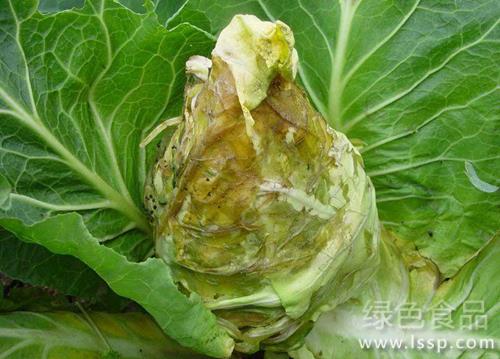
Cabbage soft rot
The soft rot pathogen overwinters in the tissues of diseased cabbage remains. The pathogen invades through wounds, including natural cracks, insect injury, disease injury and mechanical injury. Among these, the highest disease incidence comes from natural cracks on the leaf stalks, followed by insect injury. Natural cracks are mainly longitudinal and occur mostly after a long drought followed by rain. Once the pathogen enters through cracks in the cabbage leaf stalks, it develops rapidly and causes great loss. Rainy weather after the head forms often leads to severe disease.
Prevention and control methods:
1 Agricultural measures. Plowing and preparing the land early can improve soil properties, increase fertility and soil temperature, and promote the decomposition of diseased cabbage residues. Using ridge culture or high-bed cultivation, which helps with drainage and prevents waterlogging, results in lighter disease. Apply more base fertilizer and topdress in time. If seedlings lack water and fertilizer and grow poorly in the seedling stage, and there is much rain later, natural cracks easily form on the leaf stalks. With sufficient base fertilizer and early topdressing, the seedlings grow vigorously, and later the plants tolerate water and fertilizer well, with fewer natural cracks and a fairly noticeable control effect.
Early sowing easily makes the susceptible stage during the cabbage heading period coincide with the rainy season, causing severe disease. Late sowing delays the heading period, which helps prevent disease. However, too late sowing affects yield, so the suitable sowing date should be determined according to variety characteristics, climate, irrigation and other factors.
When severely diseased plants are found in the field, harvest or pull them out promptly to reduce the source of inoculum and prevent spread. Especially before heavy rain and before irrigation, check and deal with them. After pulling them out, the holes can be filled with slaked lime for sterilization.
2 Chemical control. Pay attention early to controlling underground pests. From the seedling stage, control pests such as flea beetles, cabbage caterpillars, diamondback moths and false potato beetles.
Before disease onset or in the early stage of disease, spray chemicals to prevent the disease from spreading. Spraying should focus on mildly diseased plants and the cabbage around them, and care should be taken to spray the cabbage leaf stalks and stem bases near the soil surface. Commonly used chemicals: agricultural streptomycin 200 ppm; Dexon original powder 500—1000 times solution; 50% amobam 600—800 times solution, etc.