White beech mushrooms failing to fruit or fruiting late affects profits, how can it be prevented?
Symptoms of late fruiting and failure to fruit in white beech mushrooms: the whole batch of mushroom bags fruits slowly, the substrate age exceeds 130 days without fruiting, or the fruiting times are uneven. The main reasons for late fruiting and failure to fruit are as follows:
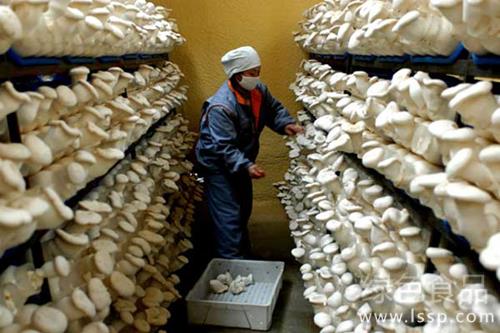
White beech mushroom management
1. Missing the inoculation period. This is mostly due to raw material preparation falling behind or poor coordination of the sterilization stoves. White beech mushroom is a mesophilic fungus, and low temperatures can stimulate fruiting. According to its growth pattern and natural temperatures, it is generally inoculated in autumn and fruits in winter. Usually, in areas north of the Yangtze River, inoculation from mid-August to early September is suitable; in southern areas, inoculation from late August to the end of September is suitable. China's geography and climate are complex, so the period after local "End of Heat" and before "Autumn Equinox", when the ten-day average temperature is 28°C, is the best inoculation period.
2. Unscientific formula. White beech mushroom mycelium growth requires high-nitrogen nutrients, but when the nitrogen concentration in the substrate is too high, the mycelium grows too vigorously, prolonging the vegetative growth period and instead inhibiting primordium formation, causing failure to fruit. The main raw and auxiliary materials currently used for white beech mushroom cultivation are high-nitrogen substances such as cottonseed hulls, wheat bran and cornmeal. In the conventional formula of 100 kg cottonseed hulls, 8 kg wheat bran and 2 kg cornmeal, the total amount of N already greatly exceeds the required ratio. Therefore, high-nitrogen auxiliary materials must never be added further, to avoid causing failure to fruit.
3. Improper mycelium incubation management. After inoculation, if the mushroom bags are stacked too densely and there is no air circulation between bags, and combined with the autumn heat that often raises temperatures, the "three temperatures" of mycelium temperature, bag temperature and room temperature all rise together, causing "bag burning" in the bottom bags; or if the stacks are not turned in time during the incubation period, the mycelium becomes severely oxygen-deficient, resulting in uneven fruiting times. During incubation and cultivation, the "four keys" must be well controlled: ① Reasonable bag stacking. In the early stage, stack 5-6 layers high, with 2-3 cm between bags and 50-60 cm between rows. As the mycelium grows, its respiration becomes vigorous and the mycelium temperature rises, so bags must be promptly spread out and thinned for heat dissipation. Turn the stacks once in the first 3 days, then once every 7-10 days, swapping top and bottom, inside and outside, so that temperature and light are even. ② Temperature-controlled incubation. After inoculation, keep the room temperature at 24-28°C for 7-10 days to promote mycelium germination and establishment. After that, the room temperature should be adjusted to 22-26°C, not exceeding 30°C. ③ Pay attention to ventilation. The incubation room requires air circulation, with ventilation once in the morning and once in the evening each day. When temperatures are high, close doors and windows during the day to resist hot wind intrusion, and open doors and windows at night for ventilation. ④ Incubate away from light. In the early stage of incubation, cultivation away from light is required.
4. Post-ripening cultivation not meeting the standard. After the white beech mushroom mycelium fills the bag, it cannot fruit immediately; it still needs to continue culturing for 35 days, commonly known as "post-ripening" cultivation. The required temperature is 20-26°C, relative humidity 70%, and 120-300 lux of scattered light. Only when the bags are firm, the mycelium is thick and white, and nutrients have accumulated sufficiently to reach physiological maturity can it shift to reproductive growth. If post-ripening does not meet the standard, fruiting is very difficult.
5. Mistakes in temperature control for primordium induction. After the bags reach physiological maturity, they still need 0-13°C low temperature and alternating temperature stimulation to form primordia and then differentiate mushroom buds. After physiologically mature white beech mushroom bags are moved into the shed and stacked, generally in late November to early December, the temperature in North China has already entered the low-temperature period, and 0°C conditions are available. But when the temperature difference is above 10°C, artificial temperature variation is required. The specific method: choose a sunny day at 10 a.m., pull open the top straw curtain, cover tightly with the shed film, lift the covering film at midnight to let cold air strike, creating a day-night temperature difference of more than 10°C. If the daytime temperature difference requirement cannot be met, steam heating can be used, but when the shed temperature rises to a difference of more than 10°C from the nighttime temperature, it should be stopped immediately. In parts of northern Hubei and southern Henan, however, the natural temperature will reach the required temperature difference, so heating is unnecessary.