Rape (rapeseed) is prone to freezing injury under low winter temperatures: remedial measures for rapeseed freeze damage
During periods of low winter temperatures, rapeseed is susceptible to freezing injury. There are two common types: first, root heaving and seedling uprooting. In winter, soil water freezes and expands in volume, lifting the soil layer upward and breaking the rapeseed roots. As the soil freezes at night and thaws during the day, the field soil sinks, causing the rapeseed roots to become exposed or broken and the plants to lodge on the ground. Fields with careless tillage, or those sown or transplanted relatively late, where the rapeseed plants are small and shallow-rooted, are prone to freezing injury. Second, leaf freezing, manifested as stiffened, shrunken, and purplish leaves. After rapeseed suffers freezing injury, take remedial measures as early as possible.
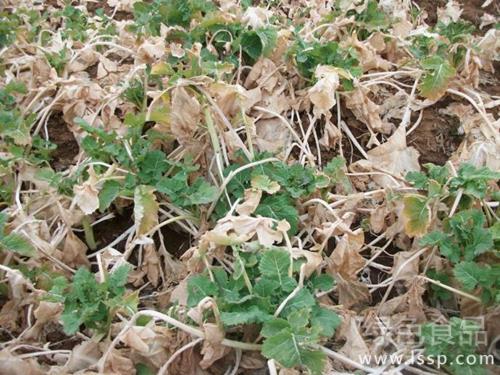
Rapeseed freeze damage
Remedy with fertilizer: apply winter manure in time.For weak, small rapeseed seedlings that have already suffered freezing injury, apply winter manure as soon as possible, mainly manure-based fertilizer, with an appropriate additional application of quick-acting nitrogen and potassium fertilizer. On a sunny day, apply per mu 500-750 kg of human and livestock manure, 10 kg of urea, 5 kg of potassium chloride or 50-75 kg of plant ash. For large rapeseed seedlings that suffered freezing injury due to excessively vigorous growth, nitrogen fertilizer must not be applied; instead, an appropriate additional amount of phosphorus and potassium fertilizer should be applied, with 5 kg of potassium chloride or 50-75 kg of plant ash and 7.5-10 kg of superphosphate per mu. In fields seriously deficient in potassium, the potassium fertilizer application rate should be increased to promote early recovery of rapeseed seedling growth.
Remedy by raising temperature: scatter mulch.Scatter crop straw such as rice straw as mulch over rapeseed fields that have suffered freezing injury to raise the temperature. Where conditions permit, 250-300 kg of dry rice straw per mu can be evenly spread between the rapeseed rows, so that the soil is not exposed and the straw does not clump, then thin soil dug from the ditches should be lightly scattered over the rice straw to prevent it from being blown away. Scattering plant ash or burnt mud ash around the base of the rapeseed can absorb heat and keep it warm, buffering the invasion of cold waves.
Intertill and earth up to promote close contact between roots and soil.Weak, small rapeseed seedlings and rapeseed seedlings transplanted relatively late have weak root growth and poor cold resistance, and because the roots are not in close contact with the soil, they are even more susceptible to freezing injury. For these rapeseed fields, intertilling should be carried out, keeping it shallow near the plants and deep between the rows; in conjunction with intertilling, clear the ditch system, take soil to earth up around the roots, raise the temperature and keep it warm, protect root growth, and help prevent lodging later on.