Scraping the bark of fruit trees in winter can effectively eliminate pests, diseases and pathogens
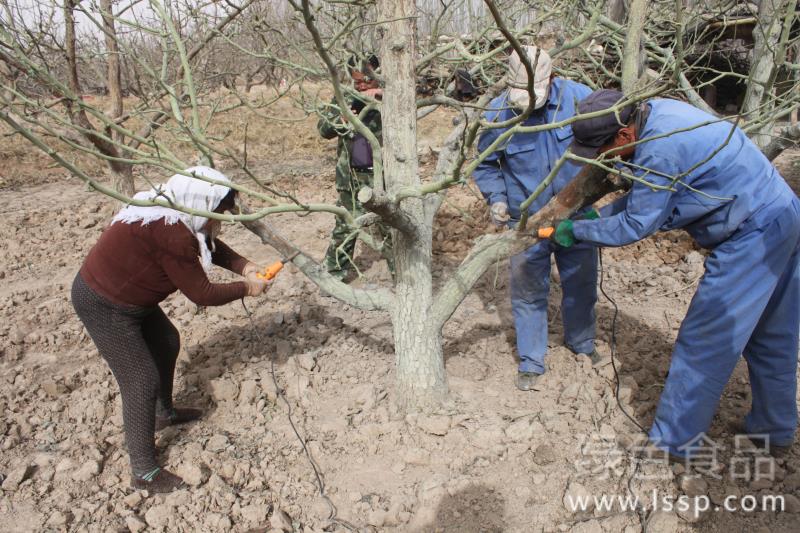
Scraping fruit tree bark
1. Which trees to scrape.Apple, pear, peach, plum, grape, walnut and other fruit trees readily develop rough bark, and all mature trees over 10 years old should be scraped. Scrape off the rough bark and the cracked, peeling bark on the trunk and scaffold branches; thoroughly scrape away lesions such as canker and ring rot.
2. When to scrape.Bark scraping is best done in late winter and early spring, when temperatures begin to rise but pests and pathogens are not yet active. Too early, and after the old rough bark is removed the tender bark is exposed and easily damaged by freezing, affecting the tree's safety; too late, and the sap begins to flow and pathogens begin to spread, so it fails to prevent pests and diseases. Generally scrape once every 2—3 years.
3. How deep to scrape.Master the depth of scraping; generally scrape off the old rough bark and cracked, peeling bark, to a depth at which no white shows, and try to avoid damaging the inner cortex. For vigorous trees, scrape deeper; for weaker trees, scrape shallower, leaving no cracks in which pathogens, pest eggs or pupae can hide. Scrape too deep and you damage the tender bark and weaken the tree; scrape too shallow and it has no effect. For canker and dry rot on fruit trees, scrape from the diseased bark down to the wood layer, and the cut edges should be smooth and the bark scraped into a diamond shape to help the wound heal in spring.
4. Whitewash after scraping.After scraping, apply a coat of whitewash, which both reduces freeze damage and kills pests and diseases under the bark and in the cracks, while also reducing sunscald. Whitewash formula: 12 parts quicklime (slaked in cool water), 3 parts stock lime-sulfur solution, 1 part salt (dissolved in hot water), 2 parts soybean flour (stirred with warm water), 40 parts water; stir and the whitewash is ready.
5. Points to note. Scraping tools such as scrapers, fruit shears and saws should be washed and disinfected with a disinfectant solution such as Bordeaux mixture, and the wounds on fruit trees where diseased parts have been cut away and the places where the bark has been scraped through must be promptly coated with Bordeaux mixture, 5% Junduxiao at 50 times dilution, Fubiqing emulsion at 2-3 times dilution, or 5 degree lime-sulfur mixture and other canker-preventing agents. To avoid infection, the whole tree can be sprayed once with 3-5 Baume lime-sulfur mixture or diesel emulsion with an oil content of 4-5%. When scraping, spread a plastic film under the canopy to collect the scraped bark debris and insect bodies, and burn or bury them deep. Store the whitewash in a non-metal container; do not use a metal container, to avoid a chemical reaction.