Key management points for tangerine during the coloring stage: adapt measures to local conditions to promote a bumper harvest
At present, tangerines are beginning to enter the coloring stage. Fruit growers are advised to adopt the following management measures according to the actual conditions of their own orchards to ensure a bumper harvest.
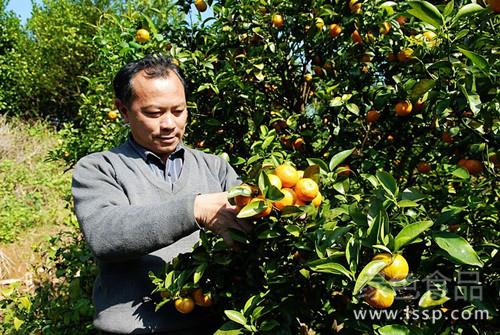
Tangerine management
1. Increase single-fruit weight, promote coloring, increase the sweetness of tangerines, improve quality, and prevent pre-harvest fruit drop: use 7 ml of 0.01% Daguangming Tianfengsu + 30 g of 98% potassium dihydrogen phosphate mixed with 30 jin of water, and spray once every 10 days when the tangerines just begin to change color (show a yellow tinge), for 2-3 consecutive sprays.
2. Strengthen pest and disease control: the main diseases of tangerines at present are anthracnose, scab, and fruit stem-end rot; the insect pests include rust mites (black-skinned fruit), red spider mites, fruit-piercing moths, and stink bugs. These pests and diseases can very easily cause pre-harvest fruit drop in tangerines. Alternately use 25% prochloraz 1000 times + 5% Alang (hexythiazox) 1000 times + 50% sulfur suspension concentrate 400 times solution, or 70% Jiangjiatuojin 800 times + 6% abamectin · beta-cypermethrin 1000 times solution, spraying each about once every 10 days, but spraying must be stopped 1 month before harvest.
3. For tangerines that bear too much fruit and hang down close to the ground, prop them up promptly to avoid disease infection.
4. Apply more organic fertilizer: calculated according to yield, generally for productive tangerine trees over 5 years old, use 100 jin of cake fertilizer, 200 jin of pig and cow manure, and 50 jin of superphosphate per mu; first compost and decompose them, then apply in early November.
5. Control winter shoots and cut roots to promote flowering: starting from mid-to-late November, plow the entire orchard and appropriately expose and sun the roots. A hoe can be used to turn over the soil clods. When hoeing, note that the soil near the trunk should be hoed shallowly; if thick roots are encountered, stop forcibly turning the soil immediately. In places far from the trunk, hoe 15-25 cm deep; after hoeing, do not break up the soil, and let it remain exposed and sunned for a period. At the same time, appropriately control water so that tangerine leaves curl slightly at noon on sunny days.
6. Prevent rats to protect fruit: around the tangerine orchard, rat prevention work should be done well, and poisoned bait should be set to trap and kill rats.