Apple woolly aphids suck the sap of fruit trees and fruits; how to control them in autumn and winter?
The apple woolly aphid is a quarantine pest of fruit trees. No matter how good the apples are, if they carry woolly aphids, they cannot be exported. The woolly aphid is a stubborn pest that parasitizes tree trunks, branches and fruit stalks, sucking the sap of apple trees and apples, weakening the trees and killing fruit-bearing branches. Because the woolly aphid is protected by a cotton-like covering, it is difficult to control.
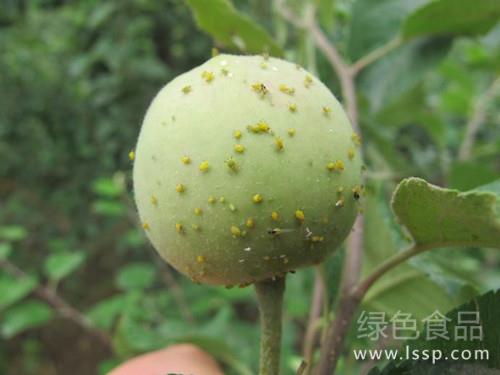
Apple woolly aphid
When the weather is dry and windy, the apple woolly aphid spreads and reproduces very quickly. The fluffy waxy filaments carrying woolly aphids can fly one to two hundred meters with the wind, from one apple orchard to another, and from the trunk to the treetops. In summer there is more rain and the climate is humid, which suppresses the flight of woolly aphids and relatively curbs their reproduction and spread. In autumn and winter, apple trees gradually shed their leaves, which is exactly the right time to control woolly aphids. In the past two years, apple woolly aphids have occurred heavily, especially in old orchards, so control should be focused on them. Control methods:
1. Spray control. When apple trees begin to shed their leaves, spray the whole orchard with 36% Lorsban at 700 times dilution, focusing on the trunk, the base of the tree, the main branches, trunk holes, cracks and pruning wounds. Spray thoroughly and heavily; if there are fluffy masses, spray them until wet and knock them down so they cannot fly. In autumn and winter the leaves are sparse, making it easy to spray the trunk and branches thoroughly.
2. Smear control with chemicals. In autumn, winter or before apple trees bud in spring, smear the trunk and main branches with 8 degrees Baume lime sulfur mixture, focusing on the base of the trunk, holes in the trunk, cracks and pruning wounds. The holes and cracks should be fully coated with the solution; if there are fluffy masses, soak them to kill the pests inside.
3. Smear control with medicated mud. In autumn and winter there is little evaporation, so 36% Lorsban at 200 times dilution can be mixed into a mud paste and smeared on trunks, branches, pruning wounds, cracks and holes that have woolly aphids. This way the efficacy lasts a long time and can kill the pests. Some fruit growers like to mound soil around the base of apple tree trunks with many woolly aphids and bury them, hoping to kill the woolly aphids. This practice is not effective: the soil cracks and subsides, and after the woolly aphids emerge from the soil, they can still continue upward and harm the fruit trees.
The above methods can all effectively control apple woolly aphids, but no matter which method is used, it is difficult to eradicate them completely. When the climate is suitable, they will still reproduce and spread rapidly, so control should be carried out regularly.