Symptoms of Boron Deficiency in Honey Pomelo and Its Harm to Flowers, Leaves and Fruit, and Control Methods
In recent years, honey pomelo has shown boron deficiency symptoms to varying degrees, affecting quality. Based on years of practice, the correction of boron deficiency in honey pomelo should focus on strengthening cultivation management, increasing the application of organic fertilizer, and emphasizing balanced nutrient fertilization and soil testing fertilization, supplemented by timely and appropriate foliar spraying of boron fertilizer to supplement boron supply.
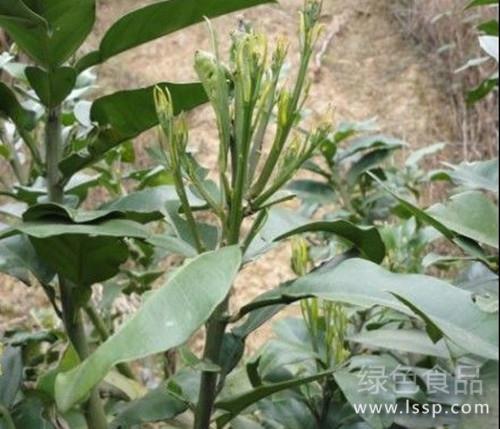
Symptoms of Boron Deficiency in Honey Pomelo
I. Symptoms of boron deficiency:
1. Leaves: New leaves show yellow water-soaked spots and deformed leaves; old leaves turn bronze-colored, and the leaves curl slightly and become brittle. In cases of severe boron deficiency, honey pomelo leaves turn yellow, and the midrib and lateral veins of the leaves swell and even split open.
2. Flowers: Floral organs develop poorly, with many deformed flowers and exposed-stigma flowers, poor flower quality, severe flower drop, poor pollination and fertilization, and low fruit set rate.
3. Fruit: Young fruit are mostly deformed, with tumor-like protrusions on the rind, often accompanied by brown gum exudation, and severe fruit drop. In obvious cases, the fruit stalk splits, and reddish-brown gelatinous material can be seen in the spongy layer of the rind in cross-sections of honey pomelo, often resulting in hard, mummified fruit. Honey pomelo expands slowly. During the growth stage, the rind becomes rough, thickens, and shows slight lignification, with yellow patches of varying sizes. At maturity, brown gelatinous material is deposited in the fruit core and the spongy layer of the rind, with poor coloration, low edible rate, little juice, low sugar content, poor flavor, and poor storability.
II. Correction techniques
1. Deep plowing to improve the soil, increasing the application of organic fertilizer, together with fertilizer specifically for honey pomelo. Cover the area inside and outside the tree canopy with weeds to keep the soil moist, cultivate vigorous trees and a well-developed root system, and improve boron uptake and utilization.
2. For boron-deficient pomelo trees, foliar spraying can be carried out at the flowering stage and young fruit stage using 50 kg of water plus 50 g of boric acid or 100 g of borax, plus 150 g of urea, 200 g of magnesium sulfate, and 150 mL of Xinye flower and fruit nutrient solution. Depending on the degree of occurrence, foliar spraying should be done 2-4 times per year.
3. For soil with water-soluble boron content below 0.4 and a pH value lower than 4.5, 1.5 kg of borax per mu can be broadcast in winter together with soil turning, and at the same time 50 kg of lime per mu should be added to correct acidity and supplement calcium, keeping the soil pH value at 5-6.5, so as to promote the uptake and utilization of boron by honey pomelo roots.
4. Girdling to promote flowering should be carried out according to tree vigor, climate, and soil conditions, so that the wounds heal on time and boron absorption is not affected by girdling. For honey pomelo trees with strong vigor, mild climate, and sufficient soil moisture, the girdling width can be 3-5 mm; under other conditions, it must be less than 3 mm or replaced by spiral ringing with 2 turns.
5. Black-eyed Susan (Rudbeckia hirta) is a green manure rich in boron, and can be planted on field ridges and grass strips in honey pomelo orchards as a source of green manure. In production, increasing the application amount of black-eyed Susan green manure can increase the supply of boron.