Five key points of winter irrigation for fruit trees: pouring frozen water can prevent winter drought and freezing damage
After fruit trees enter dormancy in winter, nutrients flow back from the tree body to the roots. In years with little rain in autumn and little snow in winter, watering the frozen water well can promote the decomposition and rotting of base fertilizer, which is beneficial to the occurrence of new roots; it is beneficial to the differentiation of flower buds in winter and spring; it keeps the soil moisture sufficient, prevents winter drought and freezing damage, and ensures flowering and fruiting the following year. That is to say, it is best to irrigate once before the orchard soil freezes. Winter irrigation is also called pouring frozen water.
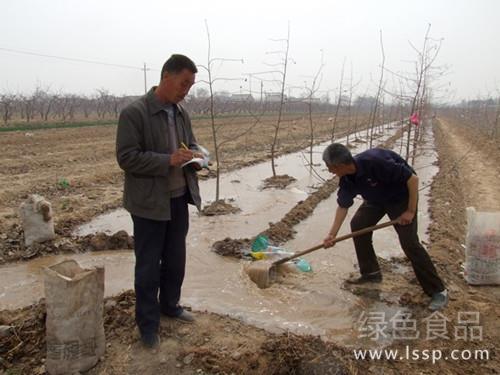
Winter irrigation of fruit trees
I. The role of winter irrigation for fruit trees:
1. Improve the cold resistance of fruit trees and ensure safe overwintering.
2. Accelerate the decomposition of organic fertilizer, facilitate the absorption of minerals by the root system, increase the accumulation of nutrients in the tree body, increase soil water content, prevent spring drought, and improve the yield and quality of fruit trees.
3. It can prevent drought. Winter irrigation stores water in the soil, which can both improve the freezing resistance of fruit trees and prevent winter and spring drought. Winter irrigation increases soil moisture, which can prevent fruit trees from drying and freezing due to water loss. At the same time, because the soil water content increases, it facilitates the absorption of water and nutrients by the root system, increasing the freezing resistance and drought resistance of fruit trees.
4. It can eliminate wind erosion. In severe winter, the wind is strong and the soil is dry, which often leads to “wind scraping away soil, tree roots exposed, severe freezing damage, and trees falling over.” Slopes, hills and beach land have light, loose soil and poor cohesion, while winter irrigation can keep the soil in a moist state; when strong winds blow the soil, it preserves warmth and moisture and also prevents freezing.
II. The best period for winter irrigation:
The suitable period for winter irrigation of fruit trees is from after fruit harvest to before the soil freezes. If winter irrigation is too early, the temperature is relatively high and evaporation is large, which is not conducive to storing water and preserving soil moisture, and reduces the cold resistance and freezing resistance of fruit trees. If it is too late, because the temperature is low, the soil hardens, water cannot seep down, and accumulated water freezes, the root system of fruit trees is prone to freezing damage. The winter irrigation time for fruit trees is generally suitable when the average ground temperature at the 5cm soil layer is 5°C and the daytime temperature is 3°C. At this time, even if the nighttime temperature drops below 0°C and freezing occurs, it can still thaw after the daytime temperature rises.
III. Irrigation amount:
The irrigation amount for winter irrigation of fruit trees is suitable when all the water on the same day after irrigation seeps into the ground and reaches the root distribution layer, that is, 20—30cm for immature fruit trees and 70—100cm for mature fruit trees, and the soil moisture is kept at 60—80% of the field maximum water-holding capacity. Too little cannot meet the needs of fruit trees; too much will wash fertilizer into areas without roots, causing fertilizer waste, and also failing to save water, electricity and labor. To judge, after 2—3 hours of irrigation, dig a pit outside the tree dish, and the seepage depth can be seen.
Winter irrigation
IV. Winter irrigation methods:
1. Well irrigation: Where conditions are good and there is a well, adopt the well irrigation method to irrigate fruit trees, increase fruit tree nutrition, and improve fruit tree growth. Before well irrigation, in the fruit tree field, according to the fruit tree rows, dig and repair the water channels well, open the gate to release water, and irrigate thoroughly and sufficiently, so that the fruit trees drink their fill and get enough, increase root moisture, and improve growth capacity.
2. Root watering: For 1—2-year-old fruit trees, watering should be done at the roots. For perennial fruit trees, build elliptical soil ridges around them with soil, with a ridge height of 15—20cm, to prevent water from flowing outward, save water sources, achieve concentrated watering, and make water penetration strong. After watering on the first day, on the second day cover the roots with soil, mounding 15—20cm, to protect the roots.
3. Trenching: For perennial fruit trees, hoe a small ditch 50—70cm away from the fruit tree, pour water into the ditch, and the water will sink to the roots and be absorbed by the roots. If it does not penetrate the first time, water again the next day, fill the ditch with soil, and firm it down to prevent air penetration and freezing injury to the roots. When trenching and adding soil, do not damage the roots, otherwise it will affect the growth of the fruit trees.
V. Mulching to preserve soil moisture:
After winter irrigation, use rice straw, wheat straw, grain husks, wheat bran, weeds, etc. to cover the entire orchard floor to preserve soil moisture and prevent freezing; when mulching, cut the straw into short sections of about 10cm to prevent it from being blown up by the wind. If there are no mulching conditions, after irrigating the fruit trees, shallow hoe and loosen the soil to prevent and reduce water evaporation.