Winter management of bayberry (Myrica rubra) must not be neglected; it directly affects whether the next year can yield a good crop
Winter management directly affects the yield and quality of bayberry (Myrica rubra) the following year. As with other fruit trees, the key to winter management of bayberry lies in orchard sanitation, and this is especially important to strengthen in warm winters. The specific contents of bayberry winter management are described below:
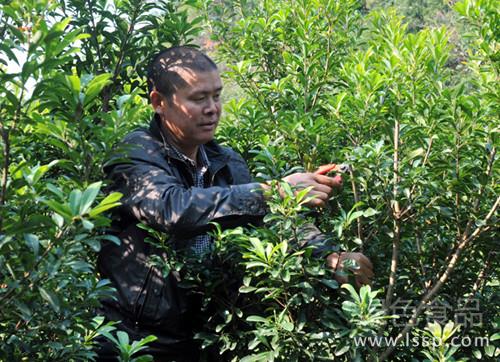
Bayberry pruning
I. Pruning:
For normally bearing bayberry trees that have not been trained, first "open a small skylight", that is, remove 1-2 large upright branches at the top, then "make small adjustments inside and out", that is, remove diseased branches and leaves, insect-damaged branches and leaves, dead branches, broken branches, and weak branches; thin out dense branches, upright branches, and overlapping branches inside the canopy; and cut off flowerless branches, late autumn shoots, branches crossing between two trees, and low-hanging branches that drag on the ground outside the canopy. In principle, for branches on the upper part of the canopy, "remove the strong and keep the weak", and for those on the lower part, "remove the weak and keep the strong".
For normally bearing bayberry trees that have already been trained, cut off diseased and insect-damaged branches, dead branches, broken branches, weak branches, crossing branches, dense branches, overlapping branches, ground-dragging branches, and so on, while keeping the remaining branches and leaves as much as possible to ensure the tree produces sufficient photosynthetic products.
For young bayberry trees, training and pruning should begin from the 3rd year. At about 40 cm above the ground, first keep 3 suitable main branches in different directions, promote the development of secondary main branches, and extend outward year by year. Timely cut off crowded internal branches and lower branches that drag on the ground; for peripheral slanting branches, either keep them well or use branch bending and propping methods to promote slanting growth, so as to increase the effective peripheral photosynthetic area and provide good ventilation and light penetration inside the tree.
The best time for winter pruning of bayberry trees is December each year. After training and pruning, promptly take the fallen branches and leaves outside the orchard for disposal, especially diseased, insect-damaged, and broken branches.
II. Fertilization:
For each normally bearing adult bayberry tree, apply 2-3 kg of rapeseed cake fertilizer, 25-30 kg of plant ash, and 50-100 g of borax each winter. For bayberry trees, it is advisable to apply spring fertilizer in winter, so that the tree can slowly absorb nutrients, enhance its overwintering safety, and promote earlier sprouting of spring shoots the following year.
III. Adding foreign soil:
Adding foreign soil under the bayberry canopy in winter can increase surface temperature and humidity and enhance root absorption capacity. The foreign soil is best yellow earth from under bracken. Before adding foreign soil, the fallen branches and leaves under the canopy should be cleaned up thoroughly, or lime sulfur mixture should be sprayed.
Bayberry orchard sanitation
IV. Orchard sanitation:
After pruning, the bayberry orchard should be cleaned up promptly to prevent diseases and insect pests the following year, especially brown spot disease, crown gall disease, red rust disease, scale insects, and so on. For orchard sanitation, 3-5 degrees Baume lime sulfur mixture can be used. When spraying, both the trunk and both sides of the leaves should be covered. The number of sprays depends on the severity of disease and insect occurrence, generally 1-3 sprays.
Lime sulfur mixture can be prepared with 2 parts sulfur powder, 1 part quicklime, and 10 parts water. First boil the water, add a sulfur paste made with warm water, stir and continue heating, then gradually add lump quicklime, keep stirring, and boil for about 40-50 minutes. When the liquid changes from yellow to soy sauce color (dark brownish red), stop the fire, filter out the residue, and the stock solution is ready. During the boiling process, continuously add hot water to replace evaporated water so that the water remains at the original amount. To ensure the quality of the liquid, the lime should be lump quicklime that is white and has not absorbed water; the sulfur powder should be fine; when boiling, add sulfur first, then lime. The stock solution must not be stored in metal containers such as iron, copper, or aluminum. It is best to use pottery, and add a layer of oil (machine oil, diesel oil, or kerosene are all acceptable) on the liquid surface to isolate it from air. It should be used as soon as it is prepared.