Winter fruit tree pest and disease control methods cannot be ignored
Winter is the dormant period for fruit trees, and the control of fruit tree pests and diseases cannot be ignored. Seizing this period can greatly reduce fruit tree pests and diseases in the coming year, achieving twice the result with half the effort. To improve the control effect, one should understand and master the overwintering forms and locations of various fruit tree pests and diseases, and take advantage of the winter slack season to kill them.
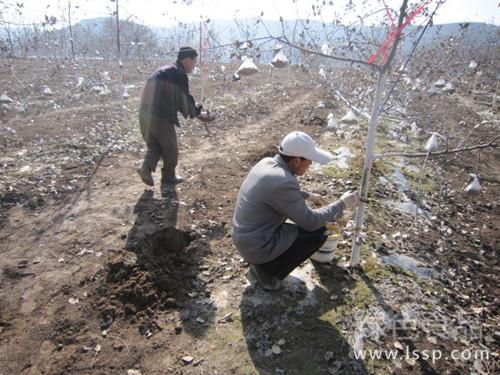
Fruit tree pest and disease control
I. Overwintering forms and locations:
Adults generally overwinter in bark crevices, loose bark, fallen leaves, weeds, and soil; larvae generally overwinter in cocoons at hidden places such as the base of the trunk, cracks in the trunk bark, pruning and saw cuts, and tying ropes; pupae generally overwinter in the surface soil near the roots; eggs generally overwinter in bark cracks and debris remaining on the trunk; pathogens generally overwinter in dead branches and fallen leaves, weeds, mummified fruit, rough bark, and other places.
II. Control methods:
1. Clean up the orchard.After harvesting the fruit, clean up the orchard, pick up and remove dead branches, fallen leaves, weeds, rotten fruit, and mummified fruit, take them out of the orchard to burn in a centralized manner or compost them into fertilizer far from the orchard. This can reduce the number of overwintering pathogens and pests and lessen pests and diseases in the coming year.
2. Deep plow the orchard.Before the freezing weather arrives, deep plow the orchard to about 30cm , which can change the overwintering environmental conditions for pests, causing them to freeze to death, be eaten by other natural enemies, or be turned from the surface to deep layers and suffocated. At the same time, it can also loosen the soil and benefit the growth of fruit tree roots.
3. Prune branches.In combination with winter pruning, cut off insect-infested branches, diseased branches, dead branches, and withered branches of fruit trees, take them out of the orchard to burn in a centralized manner, which can eliminate many kinds of pests and diseases.
4. Scrape bark in winter.The rough bark, old bark, and loose bark on the main trunk and main branches of fruit trees are places where pests overwinter. When scraping bark, a plastic sheet should be spread under the trunk, and a knife should be used to scrape off the rough bark, old bark, and loose bark, take them out of the orchard, and burn them in a centralized manner.
5. Fill holes.Decayed holes and cracks on the main trunk of fruit trees are also overwintering places for pests. Before the freezing weather arrives, fill the decayed holes and cracks in the trees with medicinal mud so that the pests die from lack of oxygen. Medicinal mud preparation: 10 parts clay, 3 parts coarse chaff, 0.5 part lime, 0.5 part trichlorfon, mix with water.
6. Whitewashing.The preparation ratio of whitewash is: 0.5 kg lime, 0.5 kg salt, 0.2 kg animal oil, 0.5 kg lime-sulfur mixture, 0.5 kg clay, 18 kg water. After stirring evenly, apply it to the trunk.
7. Tie film.Tie a circle of plastic film about 20cm wide at the base of the trunk to prevent pests from climbing up the trunk.
8. Spray pesticide.Spray pesticide promptly in places with dense weeds and many dead branches and leaves inside and outside the orchard for a good control effect. Spray 3-5 degrees Baume lime-sulfur mixture or 50% carbendazim 100-200 times liquid, which can eliminate some pests and diseases overwintering in the trunk and soil.
9. Bundle the trunk.When winter begins, twist wet straw and other materials into a straw bundle, tie it to the trunk, and before fruit trees sprout in early spring, untie it and take it out of the orchard, burn the straw bundle, which can completely eliminate the overwintering pests in the straw bundle.